Chicken Pozole Rojo Recipe, Easy Mexican Dinner in 1 Hour
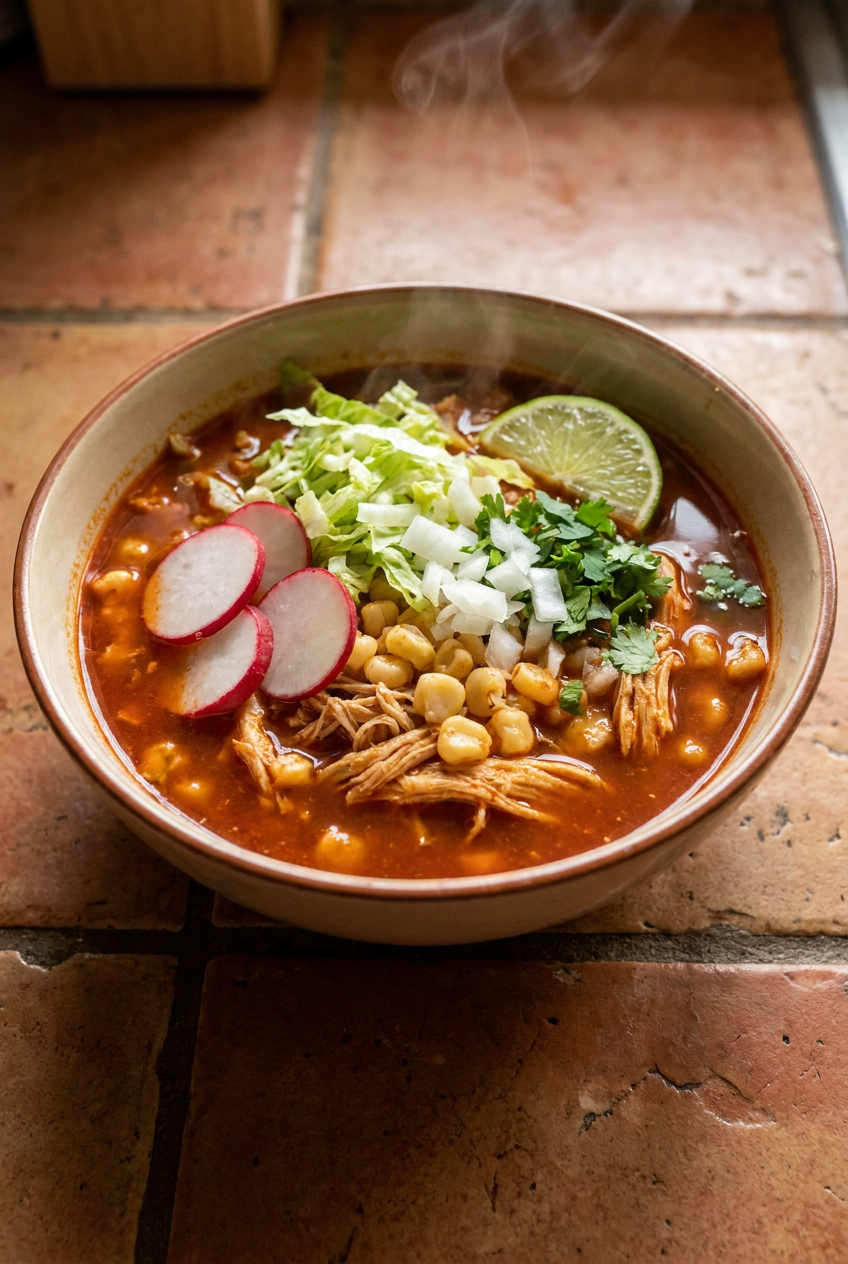
Table of Contents
- Chicken Pozole Rojo: A vibrant and hearty Mexican stew with tender chicken, hominy, and a rich, earthy chile broth.
- Why You Will Love This Chicken Pozole Rojo Recipe
- Your Simple Ingredients for the Perfect Chicken Pozole Rojo
- How to Make Perfect Chicken Pozole Rojo
- Pro Tips and Easy Variations for Your Chicken Pozole Rojo
- Serving Suggestions
- Nutrition Information
- Storage and Make-Ahead Instructions
- Your Chicken Pozole Rojo Questions Answered
- More Incredible Mexican Recipes to Try
- The Story Behind This Recipe
- Pin This Recipe for Later
Chicken Pozole Rojo: A vibrant and hearty Mexican stew with tender chicken, hominy, and a rich, earthy chile broth.
I still remember the first time I walked into a tiny family run taqueria in Mexico City and the air was thick with the scent of simmering chiles and garlic. The cook handed me a deep bowl of pozole rojo and I was instantly hooked. There is something deeply comforting about a stew that manages to feel both ancient and entirely approachable, the hominy plump and chewy, the chicken falling apart with the lightest touch of a fork, the deep red broth carrying whispers of smoke and warmth from toasted chiles. This chicken pozole rojo recipe is my at home version of that bowl, and it is one I come back to whenever I need a dinner that feels like a celebration but comes together in about an hour.
What makes this particular pozole stand out from others you might find is the simplicity and the care we give to the chiles. Instead of a complicated list of aromatics, we let guajillo and ancho chiles do most of the heavy lifting. They are toasted just until fragrant, soaked, and blended into a smooth puree that becomes the soul of the broth. The result is a deeply layered flavor that tastes like it simmered all afternoon, even though you can pull it off on a busy weeknight. The chicken finishes cooking right in that chile broth so every bite stays juicy and infused with the earthy richness of the sauce.
This is the kind of meal I make when friends come over for a casual game night, when I need to bring comfort to a sick neighbor, or when I simply want to spend a quiet Sunday around the table with my family. Gathering around a pot of pozole feels special, especially when everyone gets to top their bowl with crunchy cabbage, peppery radishes, and a generous squeeze of lime. If you have ever made a batch of fluffy Japanese souffle pancakes for a lazy morning, you know that joy of creating something that wows people. This pozole does the same thing for dinner. It is hearty and satisfying yet fresh at the same time. Whether you are new to cooking Mexican food or you have been making pozole for years, this recipe will walk you through every detail so you can confidently make a bowl you will be proud of.
Why You Will Love This Chicken Pozole Rojo Recipe
- Unbelievably rich chile flavor without all day simmering. Toasting dried chiles and blending them into the broth creates a depth that usually takes hours. You get that slow cooked taste in a fraction of the time because we build layers right from the start.
- Tender pulled chicken in every single spoonful. Cooking the chicken directly in the chile broth keeps the meat incredibly moist and infuses it with flavor. When you shred it and stir it back in, every bite is coated in that gorgeous red sauce.
- A complete meal that feeds a crowd with ease. With hominy, protein rich chicken, and a rainbow of fresh toppings, one bowl delivers comfort and nutrition. This recipe makes six generous servings and doubles beautifully if you are feeding a larger group.
- Endlessly customizable to your own taste. From the toppings bar to the heat level, you are in control. Set out bowls of cabbage, radish, cilantro, and lime, and let everyone build their perfect bite.
- Even better the next day. Like many braised dishes, pozole deepens in flavor overnight. Make it on a Sunday and enjoy an even more incredible Monday dinner with very little effort.
- Uses accessible ingredients with simple techniques. Dried chiles might look intimidating but they are widely available and once you know how to toast and soak them you will use that skill in countless other dishes. The rest of the ingredients are everyday staples you likely already have.
Your Simple Ingredients for the Perfect Chicken Pozole Rojo
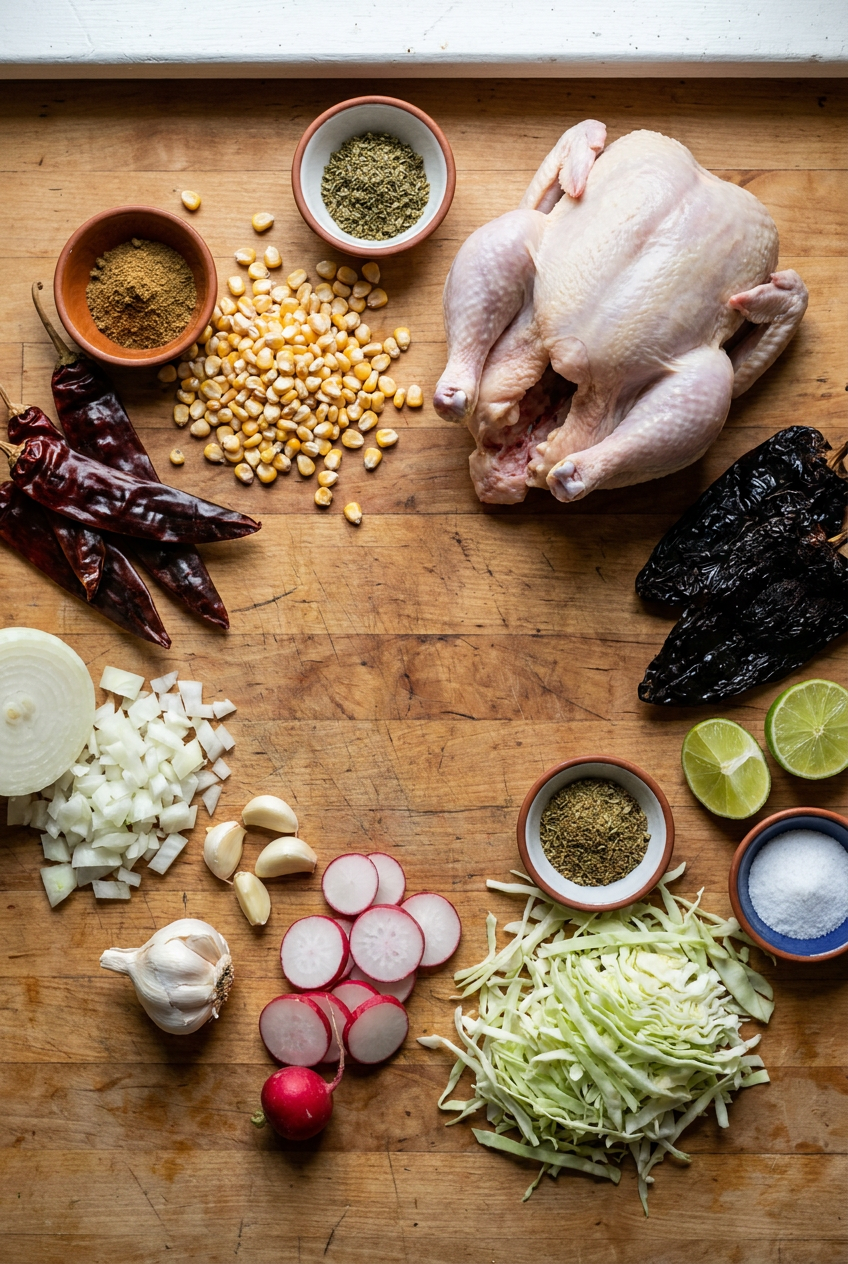
Chile Broth
- 4 dried guajillo chiles, stemmed and seeded
- 2 dried ancho chiles, stemmed and seeded
- 1 medium onion, quartered
- 4 cloves garlic, peeled
- 1 tsp dried Mexican oregano
- 1 tsp ground cumin
- 4 cups low sodium chicken broth
Pozole Base
- 1.5 lbs boneless skinless chicken thighs, or bone-in for more flavor
- 2 cans (25 oz each) white hominy, drained and rinsed
- 1 tbsp vegetable oil
- Salt, to taste
Toppings
- 2 cups thinly sliced green cabbage
- 4 radishes, thinly sliced
- 1/4 cup chopped fresh cilantro
- 1 lime, cut into wedges
- Tortilla chips or tostadas, for serving (optional)
Ingredient Notes
Guajillo chiles are the backbone of the red chile flavor. They are mildly spicy with a fruity, slightly tangy note that gives the broth its vibrant color and depth. Look for chiles that are pliable and not brittle, with a deep red sheen. In a pinch, you can substitute dried California chiles, but the flavor will be a bit milder and brighter.
Ancho chiles are dried poblano peppers and bring a subtle raisin like sweetness and a whisper of smokiness. They round out the sharpness of the guajillo and add complexity. If you can only find one type of chile, opt for all guajillo, but using both creates a much more nuanced broth. Avoid chiles that look dusty or have cracks.
Hominy is the defining ingredient of pozole. These large corn kernels have been nixtamalized, giving them a unique puffy chewy texture and a distinct earthy flavor that absorbs the chile broth beautifully. Canned white hominy works perfectly here. Rinse it well to remove any tinny taste. If you have access to frozen or freshly prepared hominy, it will be even more tender, but canned is consistent and convenient.
Chicken thighs keep the stew rich and moist. Boneless skinless thighs are easy to work with, but bone in thighs yield an even deeper chicken flavor in the broth. If you go that route, you will simmer a little longer and remove the bones after cooking. Chicken breast can work in a pinch but tends to dry out, so be careful with timing.
Mexican oregano has a floral, citrusy profile distinct from Mediterranean oregano. It pairs wonderfully with chiles and cumin. If you cannot find it, use regular oregano but add a tiny pinch of dried marjoram or a very small strip of lemon zest to mimic that brightness.
How to Make Perfect Chicken Pozole Rojo
Phase 1: Build the Chile Foundation
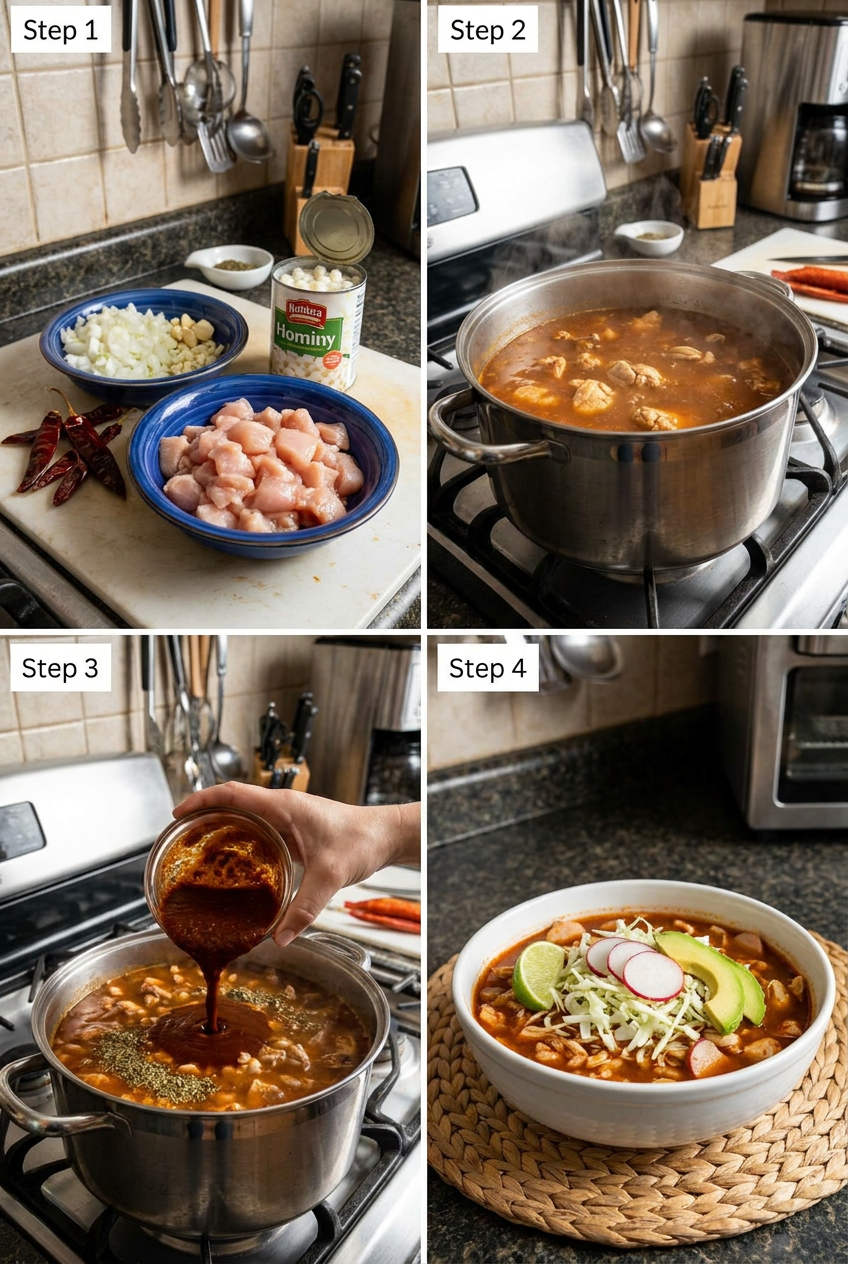
Toast and Soak Chiles. Place a dry skillet over medium heat. Once hot, lay the stemmed and seeded guajillo and ancho chiles flat in the pan. Toast them for about 1 to 2 minutes per side, pressing down gently with a spatula. You will know they are ready when they become slightly pliable and release a deep, fruity aroma. Watch them closely because over-toasting even by a few seconds can introduce bitterness. As soon as they are fragrant, transfer them to a bowl and cover with hot water. Let them soak for 15 minutes until completely softened. This step rehydrates the chiles so they blend into a velvety puree.
Blend the Chile Base. Drain the soaked chiles and place them in a blender along with the quartered onion, peeled garlic cloves, dried Mexican oregano, ground cumin, and 1 cup of the chicken broth. Blend on high speed until the mixture is completely smooth and no large pieces remain. For an even silkier broth, you can pour the blended mixture through a fine mesh sieve into a bowl, using the back of a spoon to push through any solids. This is optional but does make the final texture exceptionally smooth. If you prefer a slightly more rustic pozole, you can skip straining entirely.
Phase 2: Sear and Simmer the Chicken
Sear Chicken Thighs. Set a large heavy bottomed pot or Dutch oven over medium high heat and add the vegetable oil. While the oil heats, season the chicken thighs generously with salt on both sides. Place them in the pot in a single layer and sear for about 3 minutes per side, until they develop a rich golden brown crust. This browning step adds a savory backbone to the pozole. The chicken does not need to be cooked through at this stage, it will finish in the broth.
Combine and Simmer. Pour the chile puree into the pot with the seared chicken, scraping up any browned bits stuck to the bottom. Add the remaining 3 cups of chicken broth and stir everything together. Bring the liquid to a boil, then immediately reduce the heat to low, cover the pot, and let it simmer for 15 minutes. During this time, the flavors begin to meld and the chicken slowly poaches in the chile broth, becoming incredibly tender. If you are using bone in thighs, extend the simmering time to 25 minutes.
Phase 3: Add Hominy and Finish the Stew
Incorporate Hominy. After the initial simmer, stir in the drained and rinsed hominy. Continue to cook uncovered at a gentle simmer for another 15 to 20 minutes. Keeping the lid off helps the broth reduce and thicken slightly, concentrating the flavors. You will notice the hominy swelling a little and taking on the reddish hue of the chile sauce. Check the internal temperature of the thickest part of a chicken thigh, it should reach 165°F (74°C) for safe eating. Once it does, remove the chicken with tongs onto a cutting board.
Shred the Chicken. Let the chicken rest for a couple of minutes, then use two forks to shred it into bite sized pieces. Return all of the shredded meat to the pot and stir it into the broth. Taste the pozole and season with additional salt as needed. The broth should be rich and well seasoned, not overly salty. If the stew seems too thick at this point, splash in a little water or extra broth until you reach your desired consistency. This step is very similar to the gentle finishing touch you give a slow braised dish like a Moroccan chicken tagine, where you let everything come together before serving.
Phase 4: Garnish and Serve
Assemble Bowls. Ladle the hot pozole into deep bowls. Set up a toppings bar with shredded green cabbage, sliced radishes, chopped cilantro, and lime wedges. Encourage everyone to pile on their favorites. The crunch of the cabbage and radishes against the tender hominy and chicken is a delightful contrast. A final squeeze of lime brightens the entire bowl and ties all the earthy chile notes together. Serve with tortilla chips or tostadas on the side for dipping or crumbling right over the top.
Pro Tips and Easy Variations for Your Chicken Pozole Rojo
Pro Tips
- Toast chiles with care. The window between fragrant and burnt is small. Toast just until you see a slight color change and smell a toasty sweetness. Over-toasted chiles will make the whole pot bitter and there is no way to fix it.
- Invest in bone-in thighs for the richest flavor. Bones and a little skin add collagen and depth during simmering. Simply remove the skin and pull out the bones after the chicken is cooked, then shred the meat.
- Season the broth after the chile puree blends. Dried chiles and canned broth already contain some salt, so wait until the end of cooking to adjust. This prevents an overly salty stew.
- Let the pozole rest before serving if you can. Even a 15 minute rest off the heat allows the flavors to marry more completely. The hominy will also absorb more of the chile taste.
- Use a blender with care for hot liquids. If your chile soaking water is still warm, vent the blender lid and cover it with a kitchen towel to prevent pressure buildup. Better yet, let the chiles cool slightly before blending.
Delicious Variations
- Green Chicken Pozole (Pozole Verde). Replace the dried red chiles with 1 pound of husked tomatillos, 2 jalapeños, and a generous handful of cilantro blended into the broth. The result is bright and tangy, with a totally different personality.
- Vegetarian Pozole. Use a high quality vegetable broth, omit the chicken entirely, and add sautéed cremini mushrooms or zucchini along with an extra can of hominy. A drizzle of crema at the table adds richness.
- Extra Spicy Pozole. Toss a couple of dried chiles de árbol into the blender along with the other chiles for a noticeable kick, or blend in a fresh serrano pepper. You can also serve sliced jalapeño as an extra topping.
- Microwaved Chiles Shortcut. In a hurry, you can soften the cleaned chiles in the microwave in a bowl of water for 3 minutes instead of soaking on the counter. The flavor will still be good, though the texture may be slightly less smooth.
If you find yourself falling in love with this style of cooking where a few key ingredients build immense flavor, you might also enjoy the bright, tangy notes of blueberry lemon ricotta pancakes for a weekend brunch. They are a completely different meal but share the idea that simple thoughtful touches make something memorable.
Serving Suggestions for a Perfect Dinner
Pozole rojo is a complete meal on its own, but a few sides turn it into a festive spread. A simple avocado and jicama salad dressed with lime and a pinch of salt adds a refreshing cool crunch alongside the warm stew. Mexican rice or cilantro lime rice makes a wonderful base if you want to stretch the servings further, simply spoon the pozole over the rice for a heartier bowl. For drinks, a cold Mexican lager or a tart agua fresca like hibiscus complements the richness without competing.
This recipe shines at casual dinner parties and family gatherings. Set the pot in the center of the table with a board of toppings and let everyone serve themselves. It scales easily: double the chile puree and broth amounts, use a bigger pot, and add an extra 10 minutes of simmering for the larger volume. Pozole is also wonderful for meal prep lunches because the flavors keep developing. Pack the toppings separately so they stay crisp until it is time to eat.
Nutrition Information
(Approximate per serving, 6 servings total) Calories: 350, Fat: 12g, Carbohydrates: 30g, Protein: 25g, Fiber: 6g, Sodium: 550mg. Nutritional values are estimates only.
Storage and Make-Ahead Instructions
- Refrigerator: Allow the pozole to cool completely, then transfer to an airtight container. It will keep well in the fridge for up to 4 days. The stew actually thickens overnight, so you may want to add a splash of broth or water when reheating.
- Freezer: Pozole freezes beautifully for up to 3 months. Portion it into freezer safe containers or heavy duty bags, leaving a little headspace for expansion. Thaw overnight in the refrigerator before reheating.
- Reheating: Reheat gently on the stovetop over medium heat, stirring occasionally. Add a splash of chicken broth or water if it has thickened too much. You can also microwave individual portions in 2 minute bursts, stirring between, until hot throughout.
- Make-Ahead: The entire pozole can be made a day in advance. In fact, it tastes even better after a night in the fridge. Store the toppings separately so they remain crisp and fresh. Simply reheat the stew and set out the topping bowls right before serving.
Your Chicken Pozole Rojo Questions Answered
Can I use chicken breast instead of thighs?
Yes, but thighs stay moister and more forgiving. If you use breast, add it only during the last 10 minutes of simmering to prevent it from drying out. Then shred and return it to the pot.
Where can I find dried chiles?
Most major supermarkets carry dried guajillo and ancho chiles in the international or Latin foods aisle. You can also order them online. They are shelf stable and last for months.
How do I control the heat level?
For a completely mild pozole, remove all seeds and veins from the dried chiles before soaking. If you like a spicy kick, add one or two dried chiles de árbol or a fresh serrano to the blender.
Can I make this recipe in a slow cooker?
Absolutely. Toast and blend the chile base as directed, then combine everything except the toppings in a slow cooker. Cook on low for 6 hours or high for 3 hours, shred the chicken, and serve.
What if I cannot find hominy?
Hominy is essential for authentic pozole, but in a pinch you can substitute with canned white corn or cooked dried field corn. The texture will be different, but the spirit of the dish remains.
Is this pozole gluten free?
Yes, all the ingredients listed are naturally gluten free. Always double check your specific chicken broth and hominy labels to be sure no gluten containing additives were used.
How do I know when the chiles are toasted enough?
You will smell a sweet, fruity aroma and the chiles will become pliable. They should not burn or develop black spots. If they start to smoke, you have gone too far.
Can I use fresh chiles instead of dried?
Dried chiles provide a completely different flavor profile: deeper, more concentrated, and slightly smoky. Fresh chiles like jalapeño or serrano work in pozole verde but not for the red broth.
What is the best way to shred chicken quickly?
Use two forks to pull the meat apart while it is still warm. For large batches, you can place the cooked chicken in a stand mixer with the paddle attachment and mix on low for about 30 seconds, it shreds perfectly.
Can I freeze pozole with the toppings?
It is best to freeze the pozole base only. Fresh toppings like cabbage, radish, and cilantro will become limp and watery when thawed. Prepare them fresh when you are ready to serve.
More Incredible Mexican Recipes to Try
Once you taste the deep, warming satisfaction of a homemade chicken pozole rojo, I think you will want to explore more of Mexico’s vibrant dinner traditions. A classic slow cooked carnitas or a bright and tangy ceviche share that same sense of fresh ingredients transformed into something unforgettable. Mexican cuisine is full of stews, braises, and slow simmered dishes that are surprisingly straightforward once you understand the building blocks: dried chiles, fresh herbs, and plenty of lime.
If you enjoyed the process of toasting and blending chiles for this pozole, you are already halfway to making an incredible mole or a robust enchilada sauce. Dishes like creamy chicken tinga or a hearty tortilla soup lean on similar techniques and deliver that same soul warming result. Whether you are planning a weeknight dinner or a weekend feast, keeping a bag of masa and a few different dried chiles in your pantry will open up a world of flavor that brings everyone to the table.
The Story Behind This Chicken Pozole Rojo
Pozole has deep roots in Mexican history, going all the way back to the Aztec civilization. Hominy, or nixtamalized corn, was a sacred ingredient, and the original pozole was often prepared for special ceremonies and celebrations. After the Spanish arrived, pork was introduced and became the most common protein in the dish. Over time, regional variations blossomed, with red pozole from the central and northern states leaning on dried chiles, and green pozole from Guerrero highlighting tomatillos and fresh green chiles. Chicken pozole emerged as a lighter alternative that still carries all the soul of the original.
Today, pozole is a beloved dish served at birthdays, New Year’s Eve gatherings, and casual family meals alike. Every cook has their own version, passed down or adapted. This chicken pozole rojo is my modern interpretation, designed for the home cook who wants authentic flavor without spending an entire day in the kitchen. It honors the toasted chiles and hominy that make pozole what it is, while being approachable enough for a Tuesday night. I hope it becomes part of your own story.
Pin This Chicken Pozole Rojo Recipe for Later
Love this recipe? Save it to your favorite Pinterest board so you can find it again easily. Share it with friends and family who would enjoy making it too.
I truly hope this chicken pozole rojo brings warmth and joy to your kitchen. The combination of tender chicken, chewy hominy, and that deeply flavored chile broth is something I never tire of. If you give it a try, I would love to hear how it turned out. Leave a comment below and let me know if you went with extra spice or piled on all the radishes. Happy cooking!
Chicken Pozole Rojo
Ingredients
Method
- In a dry skillet over medium heat, toast the guajillo and ancho chiles for 1-2 minutes per side until fragrant. Place them in a bowl, cover with hot water, and soak for 15 minutes until softened. Drain.
- In a blender, combine the soaked chiles, onion, garlic, oregano, cumin, and 1 cup of the chicken broth. Blend until very smooth. Strain through a fine-mesh sieve into a bowl for an extra silky broth (optional).
- Heat oil in a large pot or Dutch oven over medium-high. Season chicken thighs with salt and sear for 3 minutes per side until golden. Add the chile puree and remaining 3 cups broth. Bring to a boil, then reduce heat, cover, and simmer for 15 minutes.
- Add the drained hominy to the pot and continue simmering uncovered for 15-20 minutes, until the chicken reaches an internal temperature of 165°F (74°C) and the flavors meld. Remove the chicken, shred with two forks, and return to the pot. Season with salt to taste.
- Ladle the pozole into bowls and let everyone add their own toppings: shredded cabbage, radishes, cilantro, and a squeeze of lime. Serve with tortilla chips or tostadas on the side.
Disclosure: This post may contain affiliate links. If you purchase through our links we may earn a small commission at no extra cost to you.
If you made this Chicken Pozole Rojo, please leave a comment below and let me know how it turned out.