Sticky Gochujang Glazed Boneless Chicken Thighs Recipe, Easy Korean Dinner in 30 Minutes
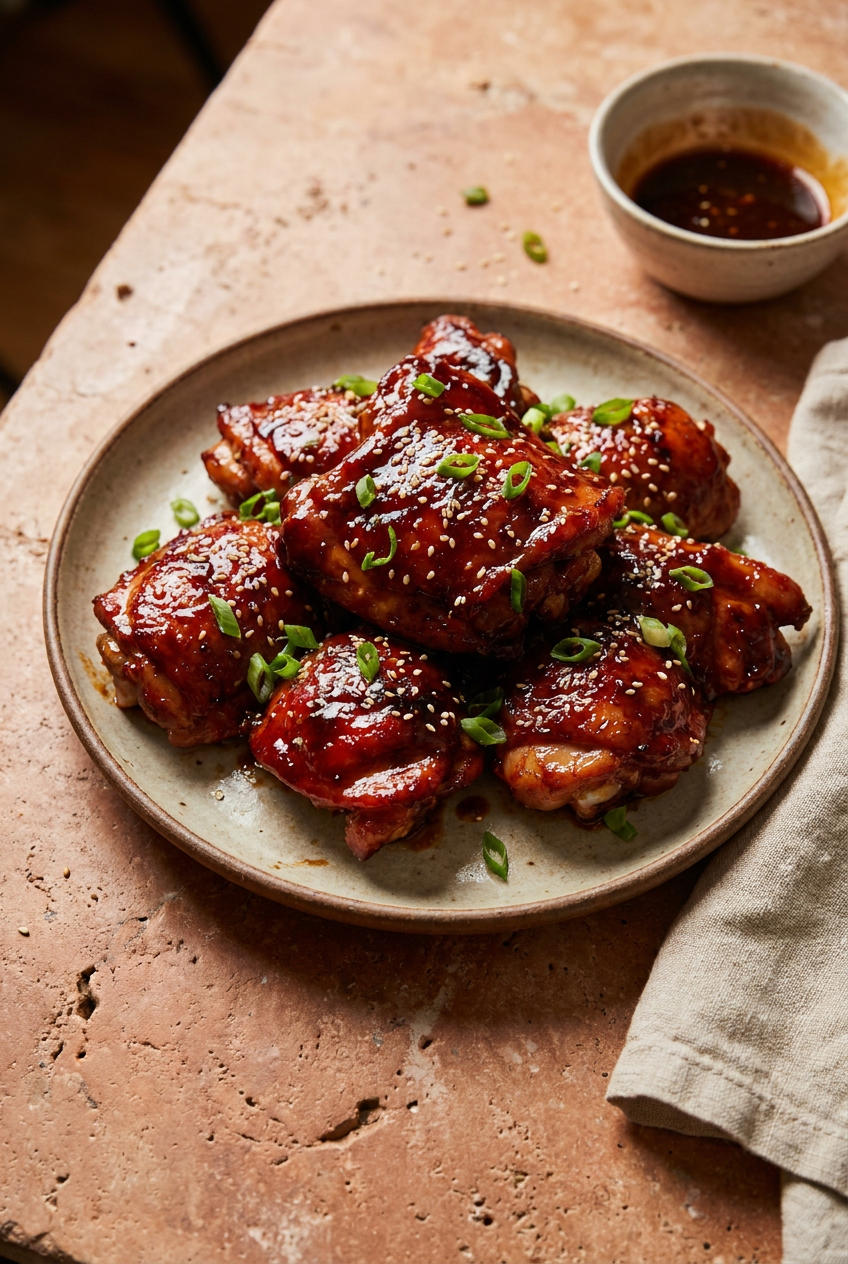
Table of Contents
- Sticky Gochujang Glazed Boneless Chicken Thighs: Juicy, caramelized chicken thighs coated in a sweet and spicy Korean gochujang glaze that will become your weeknight hero
- Why You Will Love This Sticky Gochujang Glazed Boneless Chicken Thighs Recipe
- Your Simple Ingredients for the Perfect Sticky Gochujang Glazed Boneless Chicken Thighs
- How to Make Perfect Sticky Gochujang Glazed Boneless Chicken Thighs
- Pro Tips and Easy Variations for Your Sticky Gochujang Glazed Boneless Chicken Thighs
- Serving Suggestions for a Perfect Dinner
- Nutrition Information
- Storage and Make-Ahead Instructions
- Your Sticky Gochujang Glazed Boneless Chicken Thighs Questions Answered
- More Incredible Recipes to Try
- The Story Behind This Recipe
- Pin This Recipe for Later
Sticky Gochujang Glazed Boneless Chicken Thighs: Juicy, caramelized chicken thighs coated in a sweet and spicy Korean gochujang glaze that will become your weeknight hero
This sticky gochujang glazed boneless chicken thighs recipe has been my answer to those frantic 6 p.m. moments when the fridge looks bare and spirits are low. I still remember the first time I tasted gochujang, it was in a tiny Korean restaurant tucked between a laundromat and a bookstore, and the gentle hum of heat, sweetness, and umami rewired my whole understanding of what a quick chicken dinner could be. The glaze clung to the meat in glossy ribbons, the edges caramelized just enough to give a satisfying chew, and every bite felt like a warm hug on a cold evening. I came home and started testing batches, tweaking the ratios of honey to gochujang, adding a whisper of ginger, and finally landed on this version that my family now requests at least once a week. It is the kind of dish that looks like you spent hours fussing but actually comes together in half an hour, leaving you plenty of time to unwind while the rice finishes steaming.
What sets this recipe apart from other quick chicken dinners is the balance of bold flavors that manages to hit every single note without overwhelming your palate. The gochujang paste brings a fermented depth you simply cannot get from a bottle of hot sauce, the rice vinegar brightens the richness of the chicken fat, and the sesame oil rounds everything out with a nutty finish. I make a point to sear the thighs until they develop a deep amber crust before the glaze ever touches the pan, because that foundation of flavor makes the sticky sauce cling and sing. It also means you get those irresistible slightly crisp edges even while the interior stays almost unbelievably tender. This is not just another chicken recipe, it is the one I turn to when I want something comforting but still vibrant, something that feels special enough for a dinner party yet simple enough for a lone Tuesday night. If you enjoy exploring global flavors from your own kitchen, you might also love the aromatic warmth of my Moroccan chicken tagine, another dish that brings a whole new world of spices right to your table.
This recipe is perfect for anyone who craves big flavor on a tight schedule. Maybe you are a busy parent trying to break out of the ground beef and broccoli rotation, or a student who wants something impressive to make for a date without resorting to takeout. I often whip it up when friends drop by last minute because the ingredient list is short and mostly pantry friendly, and the chicken is on the table before anyone can start rummaging for snacks. It also works beautifully for meal prep. The thighs reheat like a dream and the glaze stays glossy and luscious. On nights when you just need a little extra comfort, the sweet and spicy aroma filling the kitchen alone will lift your mood. Trust me, you are going to keep coming back to this one.
Why You Will Love This Sticky Gochujang Glazed Boneless Chicken Thighs Recipe
- Incredibly fast and efficient. From start to finish you are looking at about 30 minutes for a complete dinner. That includes prep, searing, glazing, and even slicing, so you can have a hot meal faster than ordering delivery.
- Unforgettable sticky glaze. The sauce reduces into a glossy, deeply savory coating that caramelizes on the chicken while staying lusciously saucy. Every bite delivers that signature gochujang warmth, balanced with honey sweetness and a touch of nutty sesame.
- Juicy every single time. Because we use boneless thighs and sear them properly, the meat stays incredibly tender and moist. You will never suffer through dry, stringy chicken again, even if you accidentally leave it on the heat an extra minute.
- Minimal, approachable ingredients. The shopping list is short and many items already live in your pantry. Once you buy gochujang paste, you will have the foundation for countless Korean inspired meals, and the rest are everyday staples like honey, soy sauce, and garlic.
- Endlessly adaptable. This recipe easily tweaks to your spice tolerance, dietary needs, and cooking equipment. You can go milder with more honey or fire it up with a pinch of red pepper flakes. You can even make it in the air fryer or on the grill without losing that signature stickiness.
- A total dinner hero. It pairs beautifully with simple steamed rice, crisp lettuce wraps, or a quick pickled radish, making the whole plate feel complete and restaurant worthy with hardly any extra work.
Your Simple Ingredients for the Perfect Sticky Gochujang Glazed Boneless Chicken Thighs
Main
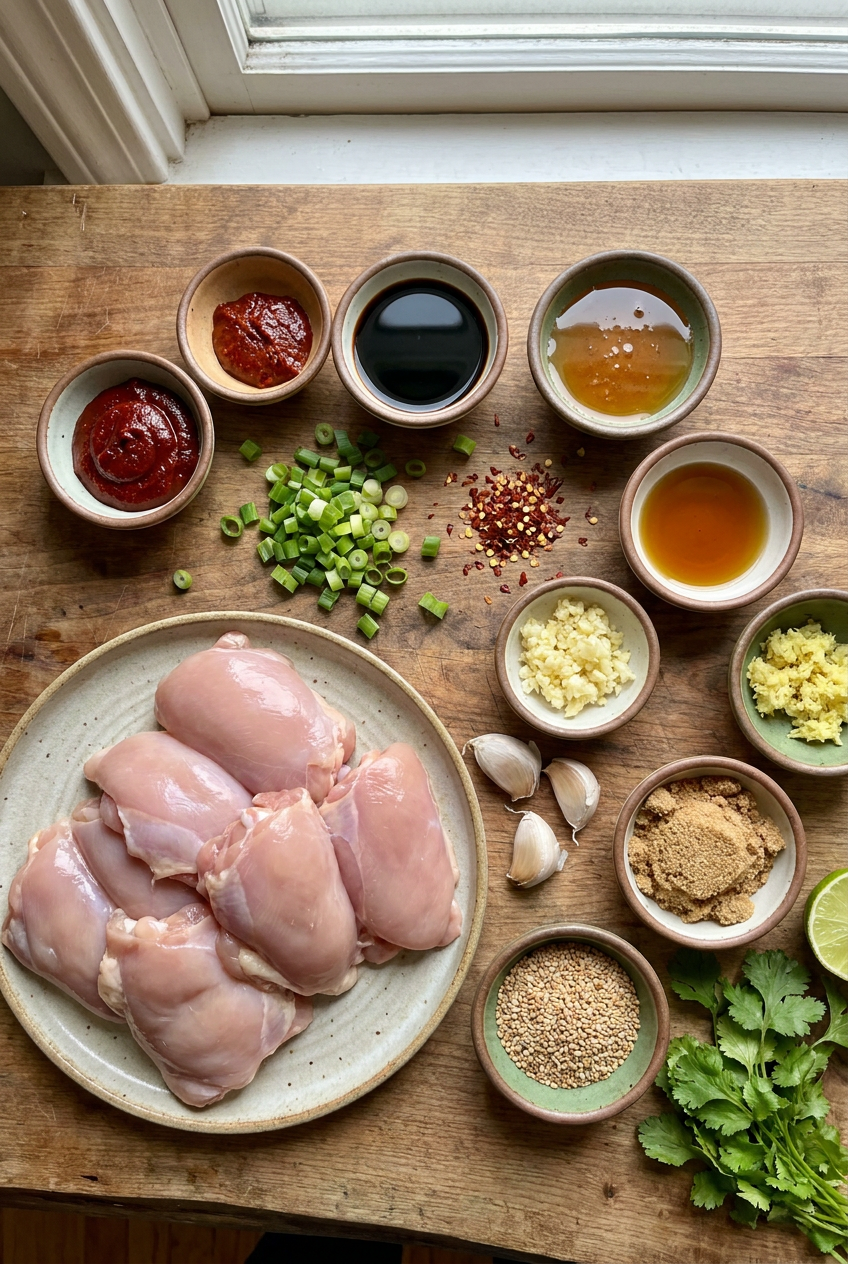
- 2 lbs boneless skinless chicken thighs, trimmed of excess fat
- 1 tsp kosher salt
- 1/2 tsp black pepper
- 2 tbsp vegetable oil, for searing
Gochujang Glaze
- 3 tbsp gochujang paste (Korean chili paste)
- 2 tbsp low-sodium soy sauce
- 2 tbsp honey
- 1 tbsp rice vinegar
- 1 tsp toasted sesame oil
- 2 cloves garlic, minced
- 1 tsp fresh ginger, grated
Garnish
- 1 tbsp toasted sesame seeds
- 2 stalks green onions, thinly sliced
Ingredient Notes
Boneless skinless chicken thighs are truly the star here. Their higher fat content keeps the meat lush and forgiving even if you slightly overcook it, and the flat surface sears beautifully. When buying, look for pieces that are even in thickness so they cook at the same rate. If you can only find bone-in, you can use them but you will need to extend the cooking time and carefully check the internal temperature. In a pinch, chicken breast works, though you must reduce the cook time by about two minutes per side to avoid drying it out.
Gochujang paste is the soul of this dish. It is a fermented Korean chili paste made from red chili, glutinous rice, soybeans, and salt. The flavor is deeply savory with a gentle, building heat and a subtle sweetness that is completely different from fresh chilies or standard hot sauces. Look for it in the Asian section of your grocery store or at a Korean market. If gochujang is too spicy for your crowd, you can mellow it by mixing in a tablespoon of ketchup or extra honey. Avoid replacing it with Sriracha or similar sauces because they lack the fermented complexity that makes this glaze so distinctive.
Low-sodium soy sauce gives the proper saltiness without overpowering the gochujang. If you only have regular soy sauce, use a bit less and taste the glaze before committing. For a gluten free version, swap in tamari or coconut aminos. Honey provides the glossy stickiness and natural sweetness that balances the chili heat. Do not skimp here, it also helps the glaze reduce to that perfect texture. You can substitute pure maple syrup or agave, but the flavor will shift slightly away from the classic Korean profile. Rice vinegar adds a bright, clean acidity that cuts through the richness. In a pinch, apple cider vinegar can stand in, but use it sparingly because it is sharper.
Toasted sesame oil is used in a small amount but delivers a huge nutty aroma that ties the whole dish together. It is usually found near the other oils. Always buy toasted, not plain sesame oil, the flavor is worlds apart. Fresh garlic and ginger give the glaze a punchy, aromatic backbone. Grate the ginger on a microplane so it melts right into the sauce, and mince the garlic finely to avoid biting into a raw chunk. Dried or powdered substitutes will not create the same bright lift.
How to Make Perfect Sticky Gochujang Glazed Boneless Chicken Thighs
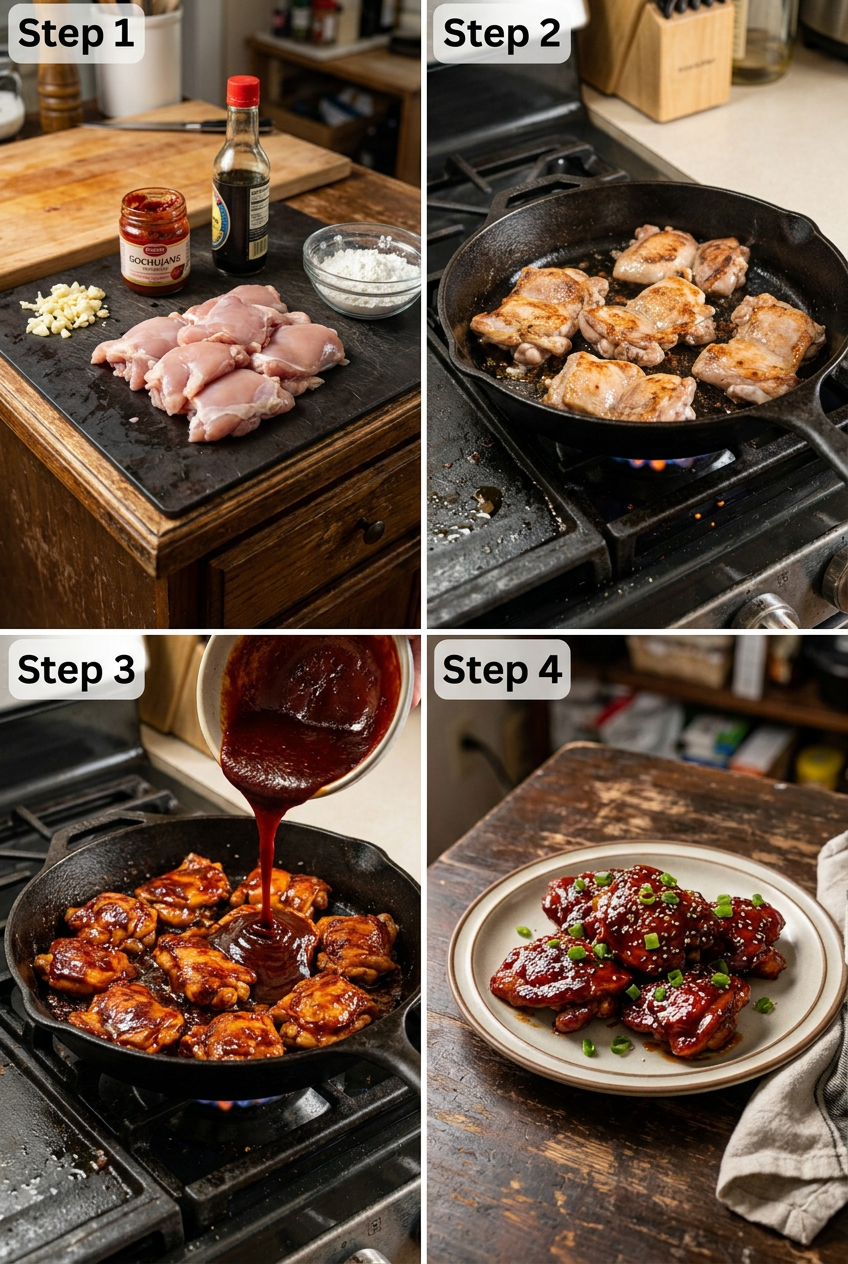
Phase 1: Prepare the Chicken
Step 1: Season the Chicken. Pat the chicken thighs completely dry with paper towels. This is nonnegotiable. Any surface moisture will steam the meat instead of letting it sear, and you will lose that gorgeous caramelized crust. Season both sides evenly with the kosher salt and black pepper, pressing gently so it adheres. I like to do this on a clean cutting board lined with a paper towel to catch any drips. Let the thighs sit at room temperature for about five minutes while you whisk the glaze together, this helps them cook more evenly. Pro tip: if your chicken feels especially slippery, blot it again after seasoning, you cannot go wrong with an extra thorough dry.
Phase 2: Build the Glaze
Step 2: Whisk the Glaze. In a small bowl, combine the gochujang, soy sauce, honey, rice vinegar, toasted sesame oil, minced garlic, and grated ginger. Stir with a fork or small whisk until everything is fully blended and the honey has dissolved into a smooth, glossy sauce. At this point, take a tiny taste. You should get a warm, rounded heat that opens up at the back of your throat, balanced by the honey’s sweetness and the vinegar’s tang. If you crave more fire, add a pinch of red pepper flakes or a few drops of your favorite hot sauce. Set the glaze near your stove because you will need it quickly once the chicken is seared. This is also a great time to put on a pot of rice or set the table.
Phase 3: Sear to Golden Perfection
Step 3: Pan-Sear the Chicken. Heat the two tablespoons of vegetable oil in a large skillet over medium-high heat until it shimmers. You want the oil hot enough that a drop of water instantly sizzles but does not jump aggressively. Carefully lay the chicken thighs smooth side down in the pan, leaving a bit of space between each piece. If your skillet is not big enough, work in two batches rather than overcrowding, because crowded chicken will steam. Let them cook completely undisturbed for 5 to 6 minutes. Resist the urge to poke or move them. You will know the first side is done when the edges are deeply golden brown and the thighs release easily from the pan without sticking. Flip them and cook for another 4 to 5 minutes, until the internal temperature reaches 165°F (74°C) on an instant read thermometer. Pro tip: if you want extra crispiness, lightly dust the thighs with cornstarch before searing, it creates an almost crunchy exterior that holds the glaze beautifully. As you perfect this technique, you will find the rhythm of searing becomes second nature, much like when you prepare a reliably delicious fluffy Japanese souffle pancakes, patience and the right pan heat make all the difference.
Phase 4: Glaze and Finish
Step 4: Glaze and Sticky Finish. With the chicken still in the skillet, reduce the heat to low. Immediately pour the glaze over the thighs and watch it bubble and sizzle as it hits the hot surface. Use tongs to flip the chicken, spooning the sauce over the top so every inch gets coated. Keep the heat low and let the sauce reduce for about 1 to 2 minutes. You are looking for the moment when it visibly thickens and clings to the meat in a glossy, sticky layer. The honey can burn fast, so do not walk away. Once the glaze is thick enough that you can drag a spoon through it and see the bottom of the pan for a second before it closes, remove the skillet from the heat. Pro tip: if the sauce seems too thin, let it bubble a few seconds longer. If it thickens too much, a tiny splash of water will loosen it back up.
Phase 5: Rest, Slice, and Serve
Step 5: Rest, Slice, and Serve. Transfer the glazed chicken thighs to a cutting board and let them rest for three full minutes. This pause lets the juices redistribute so the meat stays tender when you slice. Cut the chicken against the grain into thick strips. Cutting against the grain shortens the muscle fibers, making each bite more tender. Arrange the slices on a platter and drizzle any remaining pan glaze over the top, then shower with toasted sesame seeds and sliced green onions. Pro tip: for a final restaurant worthy touch, warm your serving plate in the oven for a minute so the glaze stays fluid and glossy from the kitchen to the table.
Pro Tips and Easy Variations for Your Sticky Gochujang Glazed Boneless Chicken Thighs
Pro Tips
- Patience with the sear. Do not flip the chicken too soon. A deep, uninterrupted sear creates a fond on the pan bottom that enriches the glaze later. When the thigh lifts easily, the crust has formed perfectly.
- Use the right skillet. A nonstick or well-seasoned cast iron pan prevents the honey based glaze from welding itself to the surface. If using cast iron, make sure it is thoroughly seasoned so cleanup stays effortless.
- Taste and tweak the glaze. Your gochujang brand might be spicier or milder than mine. Always taste the raw glaze and adjust with extra honey for sweet balance or a sprinkle of chili flakes for more punch.
- Let the chicken rest. Those three minutes off the heat are crucial. Slice too soon and the juices escape onto the board, leaving the meat drier. A brief rest keeps every strip plump.
- Keep the heat low during glazing. Once the glaze hits the pan, high heat will burn the honey in seconds. Low and steady allows the sauce to reduce into a sticky lacquer without scorching.
- Plan your sides first. Have the rice steamed, lettuce washed, and pickles ready before you start the chicken. The final stage moves quickly and you want to serve the dish the moment it is done for the best texture.
Delicious Variations
- Grilled version. Cook the thighs on a hot grill until fully done, then brush the glaze on during the last two minutes. This prevents the sugars from burning over direct fire while still giving you smoky char marks.
- Air fryer method. Cook the seasoned thighs at 400°F for 12 minutes. Brush with the glaze and air fry for an additional 2 minutes until sticky. The circulating heat creates an almost fried exterior without any extra oil.
- Spicy double glaze. Make one and a half times the glaze recipe. Use half as a marinade for 20 minutes before searing, then finish with the remaining half. The inner layer infuses flavor deeply while the outer layer stays fresh and glossy.
- Over rice bowls. Slice the chicken and serve it over a bowl of warm rice with steamed broccoli, kimchi, and a fried egg. The runny yolk mixes with the glaze to create the ultimate comfort meal.
- Lettuce wrap style. Skip the rice and pile the sliced chicken into crisp butter lettuce leaves with shredded carrots and a drizzle of extra sesame oil. It becomes a fresh, low carb dinner that still satisfies.
If you find yourself captivated by sweet and tangy glazes, you might also adore my blueberry lemon ricotta pancakes. They bring a bright, fruity burst to your breakfast table with the same kind of irresistible sticky sweetness.
Serving Suggestions for a Perfect Dinner
This sticky gochujang chicken thrives alongside simple, cooling accompaniments. A mound of steamed jasmine rice is my go to because it soaks up every last bit of glaze. For a tangy contrast, pile some quick cucumber kimchi or pickled radish on the plate. Their crisp, acidic bite cuts the richness beautifully. You can also wrap the sliced chicken in crisp lettuce leaves with a spoonful of warm rice and a scattering of fresh herbs like cilantro. To drink, a cold glass of sparkling water with a squeeze of lime or a light lager works wonders to cool the palate between bites.
This dish shines on busy weeknights when you need something substantial and nourishing, but it is also a star at casual dinner parties or game day spreads. You can easily double or triple the recipe, just make sure to sear the chicken in batches to keep that deep browning. Serve it family style on a large platter with an array of banchan (Korean side dishes) like sautéed spinach and bean sprout salad for a full Korean inspired meal. It is forgiving enough to reheat for meal prep lunches, and the flavors actually deepen overnight, making tomorrow’s desk lunch something to genuinely look forward to.
Nutrition Information
(Approximate per serving, 4 servings total) Calories: 420, Fat: 22g, Carbohydrates: 18g, Protein: 35g, Fiber: 0g, Sugar: 14g, Sodium: 780mg. Nutritional values are estimates only.
Storage and Make-Ahead Instructions
- Refrigerator: Store the fully cooked chicken and any extra glaze in an airtight container for up to 4 days. The glaze will firm up when cold but reliquefies easily upon reheating.
- Freezer: Allow the chicken to cool completely. Wrap individual portions tightly in plastic wrap, then place in a freezer safe bag or container. Freeze for up to 3 months. Thaw overnight in the fridge before reheating.
- Reheating: The best method is to place the chicken in a skillet with a splash of water over medium heat. Cover and warm for about 5 minutes until heated through and the glaze becomes sticky again. You can also microwave for 2 minutes on medium power, though the skillet method preserves the glossy texture best.
- Make-Ahead: You can season the chicken up to 8 hours ahead and keep it covered in the fridge. The glaze can be whisked together a day in advance and stored in a sealed jar. That way, when dinner time arrives, you simply sear, glaze, and devour in under 20 minutes.
Your Sticky Gochujang Glazed Boneless Chicken Thighs Questions Answered
Can I use chicken breast instead of thighs?
Yes, chicken breast works. However, to avoid dryness, reduce the cooking time by about 2 minutes on each side and check that the internal temperature reaches 165°F (74°C). Thighs are preferred for their richness and forgiveness.
Is this dish very spicy?
Gochujang provides a warm, mild heat that builds slowly rather than an aggressive burn. You can dial it down by using less paste and adding extra honey, or mix in a tablespoon of ketchup to soften the intensity without losing the fermented depth.
How can I make this gluten free?
Swap the soy sauce for tamari or coconut aminos. Most gochujang is naturally gluten free, but always check the label because some brands include wheat. The remaining ingredients are all safe.
What if I cannot find gochujang paste?
While there is no perfect substitute, you can approximate the flavor by mixing 3 tablespoons of red miso paste, 1 tablespoon of chili paste or sriracha, and a teaspoon of brown sugar. It will not be identical but will give a similar savory sweet heat.
Why did my glaze turn out watery or thin?
The glaze needs time over low heat to reduce into a sticky consistency. If it still seems thin, let it simmer for an extra minute or two, stirring constantly. Also, make sure your chicken is thoroughly dried before searing to avoid excess water releasing into the pan.
Can I make this dish in advance?
Absolutely. The cooked chicken holds well in the fridge for up to 4 days. The glaze actually melds and deepens in flavor overnight. Reheat gently on the stovetop with a splash of water to bring back the sticky shine.
How do I know when the chicken is fully cooked?
Use an instant read thermometer inserted into the thickest part of a thigh. It should read 165°F (74°C). If you do not have a thermometer, slice into a thigh near the center and check that the meat is opaque white throughout with clear juices.
Can I double this recipe for a crowd?
Easily. Just be careful to sear the chicken in batches so the pan stays hot and the thighs develop a proper crust. The glaze recipe scales linearly. Keep the first batch warm in a low oven while you finish the second.
How do I prevent the glaze from burning?
Reduce the heat to low once you add the glaze, and watch it closely. Honey and gochujang both contain sugars that scorch quickly if the pan is too hot. Stir and flip the chicken continuously until the sauce reaches the desired stickiness, then remove from heat immediately.
Can I freeze the leftovers?
Yes, the chicken freezes well. Cool it completely, wrap tightly, and freeze for up to 3 months. Thaw overnight in the refrigerator and reheat gently in a skillet with a little water to refresh the glaze.
More Incredible Recipes to Try
If the deep savory notes of this Korean dinner have you hooked, you will definitely want to explore other bold, comforting dishes from around the world. A hearty Moroccan chicken tagine uses tender slow cooked poultry infused with warm spices like cinnamon and cumin, a perfect next stop on your culinary travels. For a Japanese twist, fluffy souffle pancakes offer a completely different but equally satisfying weekend project, pillowy and sweet with that melt in your mouth quality that rewards patience and technique.
And when breakfast calls for something bright and special, my blueberry lemon ricotta pancakes bring a burst of fresh fruit and creamy ricotta to your stack. They share this recipe’s spirit of transforming simple ingredients into something unforgettable. Whether you lean toward spicy dinners or sweet mornings, the kitchen is your playground, and these recipes are your ticket to many happy meals ahead.
The Story Behind This Sticky Gochujang Glazed Boneless Chicken Thighs
Gochujang has been a cornerstone of Korean cooking for centuries, originally crafted in earthenware pots called onggi buried underground to ferment through the seasons. The process marries the heat of red chili powder with the earthy sweetness of rice and soybeans, creating a paste that adds depth to stews, marinades, and dipping sauces alike. This recipe takes that ancient flavor and folds it into a quick, everyday technique familiar to Western home cooks, proving that traditional ingredients can feel completely at home in a busy modern kitchen.
I created this version one evening when I was craving the sticky Korean fried chicken I loved as a young adult but wanted something lighter and faster. After several rounds of testing, I realized that boneless thighs seared in a hot pan and glazed without deep frying delivered all the sticky, caramelized satisfaction with a fraction of the effort. It has since become my go to for introducing friends to Korean flavors, and I hope it becomes that bridge for your own table, connecting a long history of fermentation and fire to a simple, joyful dinner tonight.
Pin This Sticky Gochujang Glazed Boneless Chicken Thighs Recipe for Later
Love this recipe? Save it to your favorite Pinterest board so you can find it again easily. Share it with friends and family who would enjoy making it too.
I truly hope this sticky gochujang glazed boneless chicken thighs recipe brings a
Sticky Gochujang Glazed Boneless Chicken Thighs
Ingredients
Method
- Pat chicken thighs completely dry with paper towels. Season both sides evenly with salt and pepper.
- In a small bowl, combine gochujang, soy sauce, honey, rice vinegar, sesame oil, minced garlic, and grated ginger. Stir until smooth.
- Heat 2 tbsp vegetable oil in a large skillet over medium-high heat. Carefully place thighs smooth side down and cook undisturbed for 5-6 minutes until deeply browned. Flip and cook another 4-5 minutes until just cooked through (internal temp 165°F/74°C).
- Reduce heat to low. Pour the glaze over the chicken, letting it bubble for 1-2 minutes. Flip thighs to coat, then let the sauce reduce until thick and sticky, about 1 more minute. Remove from heat.
- Transfer chicken to a cutting board, rest 3 minutes. Slice against the grain into strips. Drizzle any remaining pan glaze over the top, garnish with sesame seeds and green onions.
Disclosure: This post may contain affiliate links. If you purchase through our links we may earn a small commission at no extra cost to you.
If you made this Sticky Gochujang Glazed Boneless Chicken Thighs, please leave a comment below and let me know how it turned out.