Classic Chicken and Andouille Sausage Gumbo Recipe, Easy American (Louisiana Creole) Dinner in 2 Hours
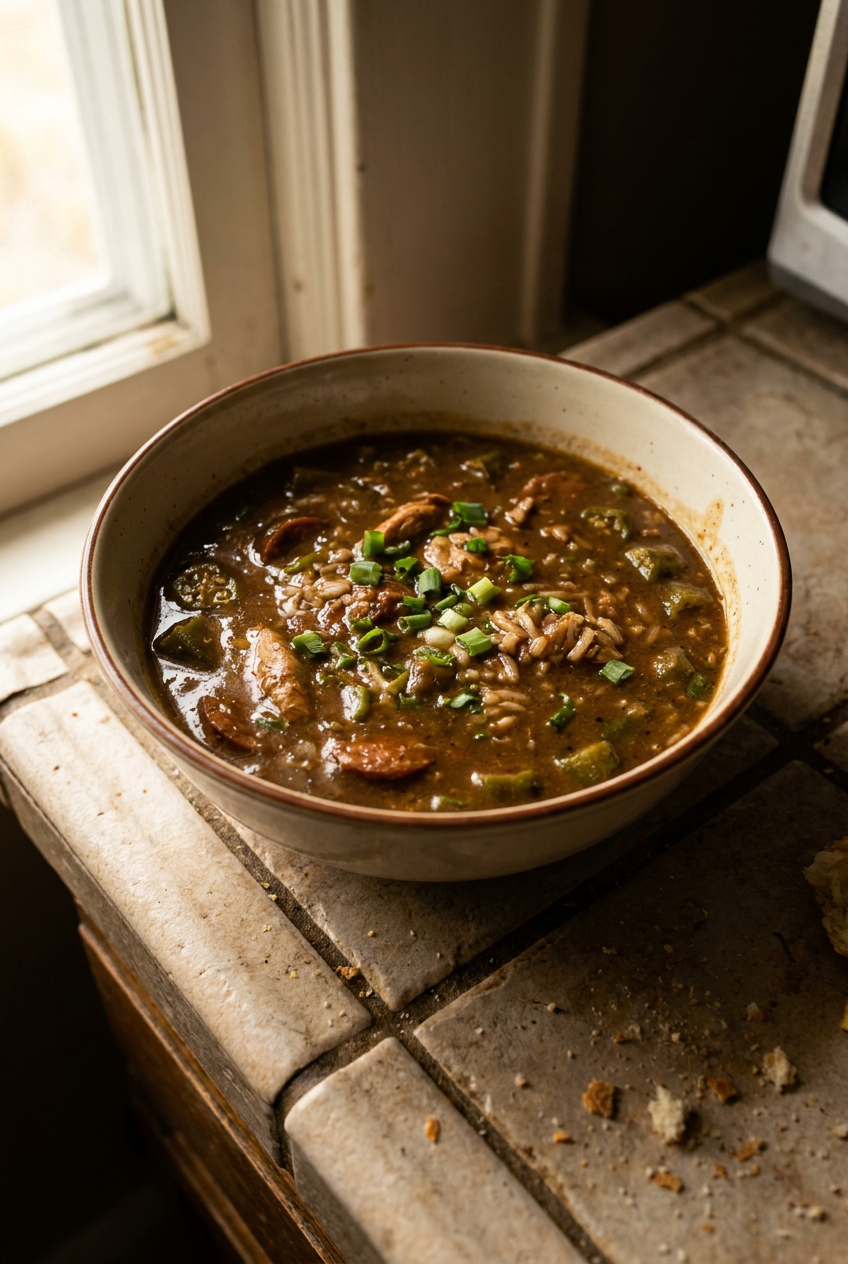
Table of Contents
- Classic Chicken and Andouille Sausage Gumbo: A deeply flavorful, soul-warming stew with a dark roux, tender chicken, and smoky sausage, served over fluffy rice
- Why You Will Love This Classic Chicken and Andouille Sausage Gumbo Recipe
- Your Simple Ingredients for the Perfect Classic Chicken and Andouille Sausage Gumbo
- How to Make Perfect Classic Chicken and Andouille Sausage Gumbo
- Pro Tips and Easy Variations for Your Classic Chicken and Andouille Sausage Gumbo
- Serving Suggestions
- Nutrition Information
- Storage and Make-Ahead Instructions
- Your Gumbo Questions Answered
- More Incredible Louisiana Creole Recipes to Try
- The Story Behind This Recipe
- Pin This Recipe for Later
Classic Chicken and Andouille Sausage Gumbo Recipe: A deeply flavorful, soul-warming stew with a dark roux, tender chicken, and smoky sausage, served over fluffy rice
This classic chicken and andouille sausage gumbo recipe carries the soul of a Louisiana kitchen right into your own home. I remember standing over a heavy Dutch oven for the first time, wooden spatula in hand, watching flour and oil transform into something almost magical. The smell of toasted pecans and coffee filled the air, and my grandmother’s gentle warning echoed in my ears: “Don’t you dare walk away from that pot.” That was the day I understood that gumbo isn’t just a recipe—it is a ritual, a slow and deliberate act of love that rewards you with one of the most deeply comforting meals you will ever ladle over a mound of steaming rice. Every spoonful carries the rich, nutty depth of a perfectly browned roux, the smoky kiss of andouille sausage, and the tenderness of chicken that has simmered until it nearly falls apart. It is a dish that gathers people around the table, and once you master the dark roux, you hold the key to a world of Creole cooking that feels both proud and profoundly welcoming.
What sets this version apart from countless others is the unwavering commitment to building flavor from the ground up. You will learn how to coax a roux to a deep milk chocolate brown without a single burnt speck, a process that demands patience but pays back with incomparable complexity. Layering begins with the roux, then the holy trinity of onion, bell pepper, and celery sizzles into the mixture to halt the cooking and add sweetness. Slowly, chicken stock unites everything, and the long, gentle simmer coaxes the chicken and sausage to release their essences until the entire pot darkens and thickens into a glossy, soulful stew. There is no shortcut for that slow development, and that is precisely why this gumbo tastes like it came from a Creole grandmother’s stove. For a very different kind of comfort, many of my readers also adore the airy lift of fluffy Japanese souffle pancakes when morning calls for something sweet, but when savory cravings hit, this gumbo is the answer.
This recipe is perfect for anyone who wants to slow down and cook with intention. It shines on a chilly Sunday when you have time to tend the roux and let the pot bubble away, but it also works beautifully as a make-ahead meal for busy weeknights because the flavor only deepens overnight. Serve it for Mardi Gras gatherings, game day feasts, or simply when you need a bowl of something that feels like a warm hug. If you have never made a dark roux before, this post will guide you step by step, holding your hand through the exact color changes, aromas, and timing so you can feel confident and proud when you bring that first spoonful to your lips. Whether you are cooking for a crowd or just for yourself with leftovers to treasure, this classic chicken and andouille sausage gumbo recipe will become a staple in your kitchen, just as it has in mine.
Why You Will Love This Classic Chicken and Andouille Sausage Gumbo Recipe
- A deeply developed, nutty flavor. The dark roux that forms the backbone of this gumbo cooks for close to thirty minutes, developing layers of toasted, almost chocolate-like richness you simply cannot rush. That patience creates a foundation no jarred roux or quick method can match.
- Perfectly tender meat in every bite. Chicken thighs stay juicy and succulent even after a long simmer, absorbing the smoky sausage and aromatic broth. Andouille sausage adds a spicy, garlicky depth that permeates the entire stew.
- Comfort that improves with time. Like many braised dishes, this gumbo tastes even better the next day. Making it ahead lets the flavors marry into something transcendent, so you can prepare it on Sunday and enjoy incredible meals all week.
- A true Louisiana technique you will master. Learning to make a proper dark roux is a skill that opens the door to countless Creole and Cajun classics. With the clear guidance here, you will nail it on your very first attempt and feel like a genuine Southern cook.
- Flexible and family-friendly. The level of heat is entirely up to you, and the recipe welcomes easy adaptations like swapping in seafood or loading up with greens. Even picky eaters love the savory, smoky broth spooned over rice.
- Nourishing and satisfying. With over 35 grams of protein per serving and a healthy dose of vegetables, this gumbo is a complete meal that fills you up without weighing you down. The rice makes it hearty, while okra adds body and a touch of brightness.
Your Simple Ingredients for the Perfect Classic Chicken and Andouille Sausage Gumbo
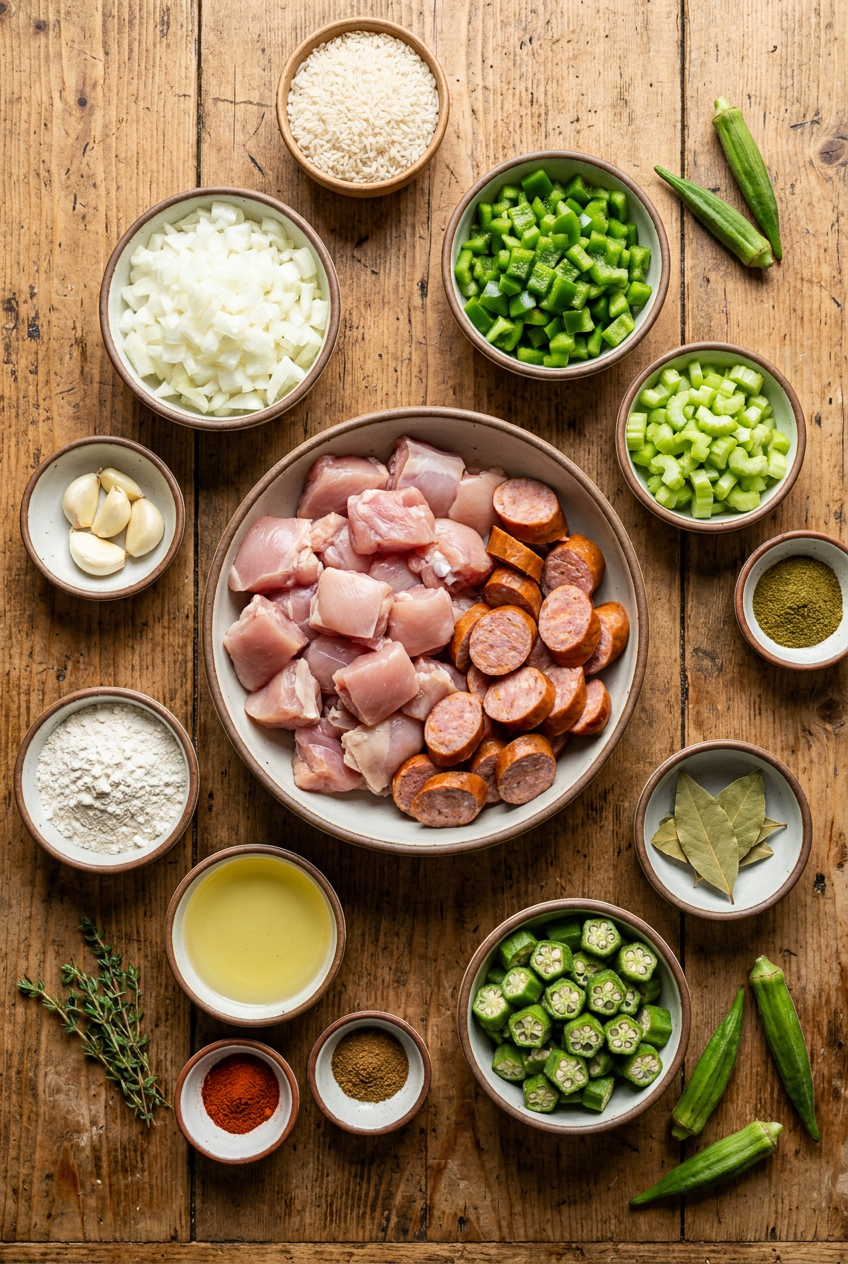
For the Roux
- 3/4 cup vegetable oil or lard
- 1 cup all-purpose flour
For the Gumbo
- 1 1/2 lbs boneless, skinless chicken thighs, cut into bite-size pieces
- 12 oz andouille sausage, sliced 1/2-inch thick
- 2 cups fresh or frozen okra, sliced if fresh
- 1 large yellow onion, diced
- 1 green bell pepper, diced
- 3 ribs celery, diced
- 4 cloves garlic, minced
- 6 cups chicken stock, preferably homemade
- 2 bay leaves
- 1 tsp dried thyme
- 1 tsp smoked paprika
- 1/2 tsp cayenne pepper, adjust to taste
- to taste kosher salt and black pepper
- 2 tbsp Worcestershire sauce
- 2 tbsp filé powder (sassafras), for serving
For Serving
- 4 cups cooked long-grain white rice, hot
- 4 green onions, sliced
- hot sauce, optional
Ingredient Notes
Dark Roux Oil and Flour. The combination of oil or lard with all-purpose flour is the soul of this dish. A neutral vegetable oil like canola or peanut works perfectly, but traditionalists often swear by lard for a slightly richer mouthfeel. The flour must be all-purpose; gluten-free blends struggle to brown properly and often yield a gritty texture. When cooked slowly to a deep milk chocolate color, the roux loses its raw flour taste and transforms into pure umami.
Boneless Skinless Chicken Thighs. Thigh meat holds up beautifully during the long simmer, staying moist and developing a silky texture. If you substitute chicken breast, it can become dry and stringy; I strongly recommend sticking with thighs. For even more flavor, you can use bone-in thighs, removing the bones before serving. Look for thighs that feel plump and have a fresh, neutral smell.
Andouille Sausage. This heavily spiced, smoked pork sausage is essential to authentic Louisiana gumbo. It brings heat, garlic, and a deep smokiness that infuses the entire pot. If you cannot find true Cajun andouille, a good-quality smoked kielbasa can work, though you may want to add a pinch of extra cayenne. Slice it into half-inch rounds so each spoonful catches a bite of that spicy, savory ring.
Fresh or Frozen Okra. Okra acts as a natural thickener and lends a pleasant, slightly grassy flavor that brightens the rich stew. Fresh okra should be firm and free of blemishes; slice it just before using. Frozen okra is a convenient alternative and can go straight into the pot without thawing. If the texture of okra is not your thing, you can leave it out and rely entirely on filé powder added at the table for thickening.
The Holy Trinity: Onion, Bell Pepper, Celery. This aromatic trio is the foundation of Creole cooking. Dicing them uniformly ensures they soften at the same rate and meld seamlessly into the gumbo. The onion brings sweetness, the bell pepper a grassy note, and the celery an herbal backbone that balances the richness.
Filé Powder. Made from ground sassafras leaves, filé powder both thickens the gumbo and adds a distinctive earthy, slightly citrusy flavor. It must never be cooked into the pot or it will turn stringy and unpleasant. Instead, sprinkle it over each bowl just before eating, letting it work its magic off the heat.
How to Make Perfect Classic Chicken and Andouille Sausage Gumbo
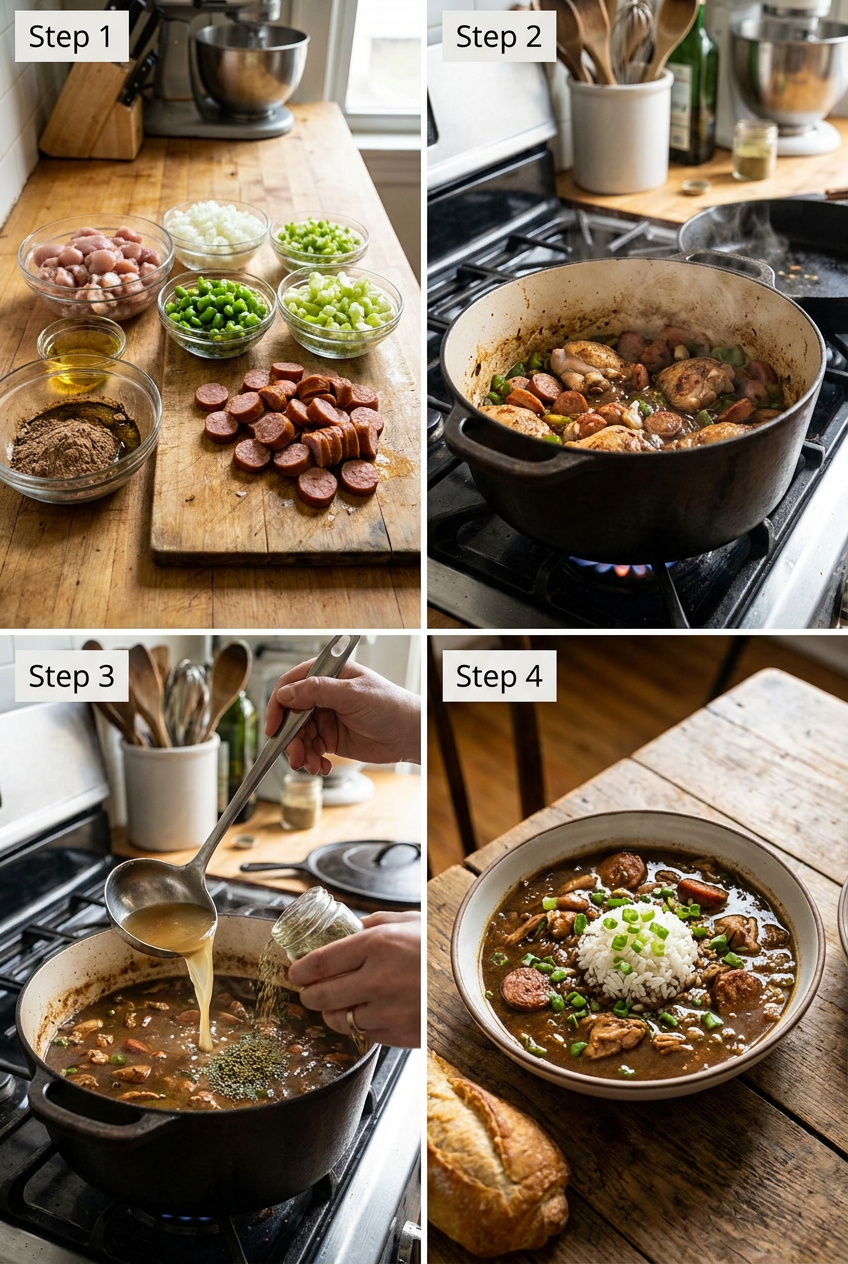
Step 1: Make the Dark Roux
In a large heavy-bottomed Dutch oven or pot, heat the oil over medium heat. Gradually whisk in the flour, creating a smooth paste. From this moment on, you cannot walk away. Whisk constantly as the roux begins its transformation. After about five minutes you will notice a blond stage, then a peanut butter hue around twelve to fifteen minutes. Keep going. Watch for the color to deepen to a warm copper, then finally a deep milk chocolate brown somewhere between twenty-five and thirty minutes. The scent will shift from doughy to remarkably nutty, almost like toasted hazelnuts. If you see black specks appear, the roux has burned and you must start over. Adjust the heat downward if the browning seems to accelerate too quickly. A flat-edged wooden spatula helps scrape the bottom of the pot cleanly. This step is long but meditative, and it is the single most important part of an outstanding gumbo.
Step 2: Sweat the Trinity
The instant the roux reaches that deep chocolate shade, immediately stir in the diced onion, green bell pepper, and celery. The sizzle will be loud and fragrant as the vegetables release steam. This sudden drop in temperature stops the roux from cooking any further and prevents scorching. Stir frequently and cook for five to seven minutes, until the vegetables have softened and become translucent. Then add the minced garlic and cook for one more minute, just until you can smell its sweet aroma. At this point, your kitchen will already smell incredible, with the nutty roux and the aromatic trinity mingling.
Step 3: Build the Broth
Begin pouring in the chicken stock in a slow, steady stream while whisking continuously. This gradual addition prevents lumps and ensures the roux dissolves completely into a smooth liquid. Once all the stock is incorporated, add the bay leaves, dried thyme, smoked paprika, cayenne pepper, Worcestershire sauce, and a pinch of salt and pepper. Bring the mixture to a boil over high heat, then immediately reduce the heat to maintain a gentle simmer. The broth will look thin at first, but trust the process. As it cooks, it will thicken and gain remarkable body from the roux and later the okra.
Step 4: Add Chicken and Sausage
Slip the chicken pieces and sliced andouille into the simmering broth. Return the liquid to a gentle simmer, never a rolling boil, which could toughen the meat. Cook uncovered for one hour, stirring every fifteen minutes or so to prevent sticking. During this time, the chicken will become incredibly tender, easily pulling apart with a spoon. Check that the internal temperature of the chicken reaches 165°F (74°C) for safety. Skim off any foam or excess oil that rises to the surface to keep the broth clean and deeply flavored. As the gentle bubbles work, you will notice the gumbo’s color deepen further and its consistency start to cling to the spoon. This slow braising approach is remarkably similar to how we coax flavor from a Moroccan chicken tagine, where patience and low heat build layers of taste that quick cooking cannot achieve.
Step 5: Incorporate Okra
Stir in the okra, whether fresh sliced or straight from the freezer. Continue simmering for twenty to thirty minutes more. The okra will turn tender and lend a subtle gloss to the stew. If using fresh okra, you will notice the gumbo thicken slightly as the okra releases its natural pectin. This is also your moment to taste and adjust the seasoning. Add more salt if needed, and sprinkle in extra cayenne for a spicier kick. The stew is ready when the okra is no longer firm and the entire pot looks cohesive and velvety.
Step 6: Finish and Serve
Remove the bay leaves and discard them. Spoon hot cooked rice into deep bowls and ladle the gumbo generously over the top. The rice should peek through the dark stew, creating a beautiful contrast. Sprinkle each serving with a pinch of filé powder—do not stir it into the pot, or it will become unpleasantly stringy. Scatter sliced green onions over everything for a fresh, mild bite. Pass a bottle of your favorite hot sauce so each person can customize the heat. Take a moment to admire the dark, glossy surface and the steam carrying that unmistakable Louisiana scent before you dig in.
Pro Tips and Easy Variations for Your Classic Chicken and Andouille Sausage Gumbo
Pro Tips
- Use a kitchen timer and a good distraction. The dark roux requires constant attention for up to thirty minutes. Set a timer for five-minute intervals to track progress and listen to a podcast or music to make the stirring feel like a ritual rather than a chore. Never leave the stove, because burning can happen in seconds.
- Sear the chicken before making the roux. For an even deeper flavor, brown the chicken pieces in a little oil in the same pot you will use for the gumbo. Remove them and set aside, then deglaze the fond with a splash of chicken stock after building the broth. This little extra step adds a tremendous savory backbone.
- Invest in a flat-edged wooden spatula. A flat edge scrapes the bottom of the pot efficiently, preventing flour from sticking and burning during the roux’s long cooking. It also makes stirring the thicker stew easier as it simmers.
- Chill and defat for a cleaner finish. Gumbo can release quite a bit of oil from the sausage and roux. Refrigerating the finished stew overnight allows the fat to solidify on top, making it simple to lift off before reheating. The flavor will be even better, and the texture lighter.
- Never cook filé powder. Filé thickens and seasons only when added off heat. Stirring it into a simmering pot creates a slimy, ropey texture that ruins the gumbo. Always sprinkle it at the table for a perfect finish.
Delicious Variations
- Seafood Gumbo. Omit the chicken and sausage entirely and use a shrimp, crab, and oyster combination. Add the seafood during the last five minutes of cooking just until the shrimp turn pink and the oysters curl, preserving their delicate texture while infusing the broth with briny sweetness.
- Gumbo Z’Herbes. In this traditional Creole green gumbo, you replace the meat with a generous mix of hearty greens like collards, mustard greens, and turnip greens, along with an abundance of leafy herbs. It is a vegetarian masterpiece traditionally served on Good Friday, thickened only with roux and file.
- Spicier Creole Kick. Amp up the heat by adding a minced jalapeño alongside the trinity and increasing the cayenne to a full teaspoon. A splash of hot pepper vinegar just before serving brightens the entire bowl with tangy fire.
- Slow Cooker Adaptation. Make the roux on the stovetop as directed, sweat the veggies, then transfer everything to a slow cooker with the remaining ingredients except okra and filé. Cook on low for six to seven hours, add okra in the last hour, and serve with filé at the table.
Serving Suggestions for a Perfect Dinner
A bowl of this gumbo is a complete meal, but classic accompaniments turn it into a feast. I love spooning the stew over fluffy long-grain white rice that has been cooked simply with a pinch of salt. Across Louisiana, many locals serve gumbo with a scoop of cold, tangy potato salad right in the bowl, a contrast of hot and cool that sounds unusual but tastes sublime. A bright, vinegar-based coleslaw balances the richness with crunch and acidity. For drinks, sweet iced tea is the standard, but a crisp lager or a slightly off-dry Riesling also stands up nicely to the smoky heat. To round out a festive spread, consider a platter of warm cornbread or crusty French bread for sopping up every last drop.
This dish is tailor-made for gatherings. A big pot easily doubles or triples to feed a crowd during Mardi Gras parties, football watch parties, or family reunions. Set up a gumbo bar with bowls of rice, sliced green onions, filé powder, hot sauces, and perhaps some crispy fried okra on the side. Everyone can build their own bowl and adjust the heat level to their liking. For a playful brunch twist, you might even follow a savory gumbo dinner with a sweet treat like our blueberry lemon ricotta pancakes the next morning, turning your Louisiana feast into a weekend-long celebration.
Nutrition Information
(Approximate per serving, 6 servings total) Calories: 580, Fat: 31g, Carbohydrates: 38g, Protein: 35g, Fiber: 4g, Sodium: 1120mg. Nutritional values are estimates only.
Storage and Make-Ahead Instructions
- Refrigerator: Store cooled gumbo in an airtight container for up to 5 days. The rice should be kept separately to prevent it from soaking up all the liquid and becoming mushy. As the gumbo chills, the flavors continue to meld, making leftovers even more delicious.
- Freezer: Freeze the gumbo without rice for up to 3 months. Portion it into freezer-safe containers or heavy-duty zip-top bags, leaving some headspace for expansion. Thaw overnight in the refrigerator before reheating.
- Reheating: Warm gumbo gently on the stovetop over low heat, stirring occasionally, until bubbling and hot throughout. You can also reheat individual portions in the microwave using 2-minute bursts and stirring between each. Always add freshly cooked rice and a sprinkle of filé just before serving.
- Make-Ahead: This is the ultimate day-before dish. Make the gumbo entirely, cool it quickly, and refrigerate. The next day, lift off any solidified fat, reheat gently, and prepare fresh rice while the pot warms. The depth of flavor will make you feel like a mealtime magician.
Your Gumbo Questions Answered
Can I make gumbo without a roux?
True Louisiana gumbo almost always starts with a roux because it provides the deep, toasty foundation that defines the dish. You can make an okra-based gumbo that relies solely on okra and filé for thickness, but the characteristic complexity will be noticeably absent. I encourage you to try the roux at least once; the flavor payoff is remarkable.
My roux took only 10 minutes to darken—is that okay?
If it darkened that quickly over high heat, it likely burned before you could detect the change. A proper dark roux at medium heat requires a patient 20 to 30 minutes. Low and slow is essential to avoid bitterness. Next time, lower the heat and watch for gradual, even browning.
Why does my gumbo taste bitter?
Bitterness almost always comes from a burnt roux or scorched garlic. Whisk the roux constantly and never increase the heat above medium. Add the garlic only at the end of sweating the vegetables, and stir it for just a minute before liquid hits the pot. If you taste bitterness, unfortunately, you may need to start fresh.
Can I use chicken breast instead of thighs?
You can, but chicken breast tends to dry out and become stringy during the long simmer. Thighs are far more forgiving and deliver the tender, juicy results you expect. If you must use breast, cut it into larger chunks and add it later in the cooking process, about 30 minutes before the gumbo is done.
Is gumbo gluten-free?
Traditional gumbo is not gluten-free because of the flour in the roux. You can make a gluten-free version by substituting a fine rice flour or a
Classic Chicken and Andouille Sausage Gumbo
Ingredients
Method
- In a large heavy-bottomed Dutch oven or pot, heat the oil over medium heat. Gradually whisk in the flour. Cook, whisking constantly, until the roux turns a deep milk-chocolate brown, about 25–30 minutes. Do not walk away—burnt roux ruins the gumbo. Adjust heat to avoid scorching; it should smell nutty.
- Once the roux reaches the right color, immediately stir in the onion, bell pepper, and celery (the Holy Trinity). Cook for 5–7 minutes, stirring often, until softened. Add garlic and cook 1 more minute.
- Gradually pour in the chicken stock while whisking to combine completely with the roux mixture. Add bay leaves, thyme, smoked paprika, cayenne, Worcestershire sauce, and a pinch of salt and pepper. Bring to a boil, then reduce heat to a low simmer.
- Add the chicken pieces and sliced andouille to the pot. Return to a gentle simmer. Cook uncovered for 1 hour, stirring occasionally, until the chicken is very tender and the gumbo has thickened and darkened. Ensure chicken reaches an internal temperature of 165°F (74°C).
- Stir in the okra and continue to simmer for 20–30 minutes, until okra is tender and the stew is glossy. If using fresh okra, the gumbo will thicken slightly. Adjust seasoning with salt and cayenne.
- Remove bay leaves. Ladle gumbo over hot rice in bowls. Sprinkle each serving with a pinch of filé powder and sliced green onions. Pass hot sauce at the table.
Disclosure: This post may contain affiliate links. If you purchase through our links we may earn a small commission at no extra cost to you.
If you made this Classic Chicken and Andouille Sausage Gumbo, please leave a comment below and let me know how it turned out.