Easy Spaghetti Carbonara Recipe, Easy Italian Dinner in 25 Minutes
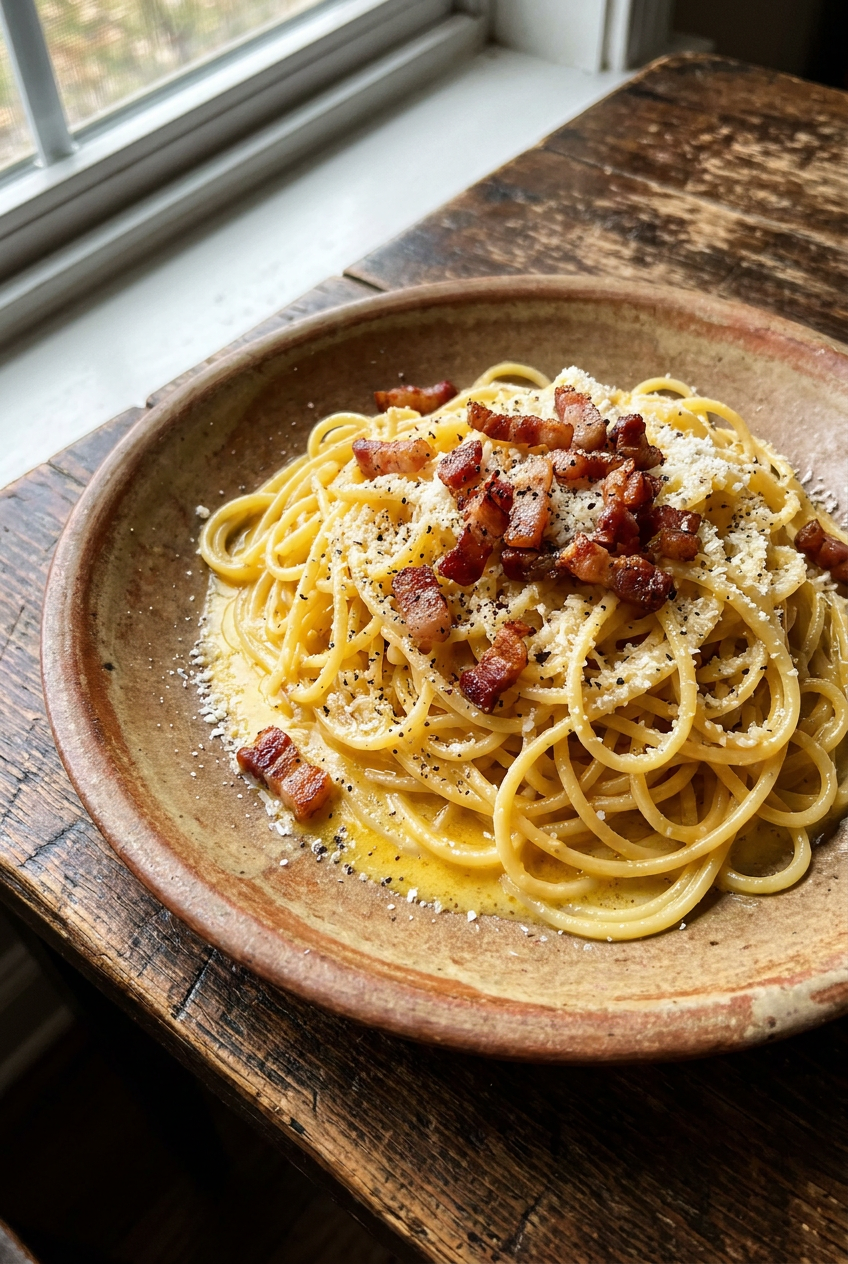
Table of Contents
- Easy Spaghetti Carbonara: A classic Roman pasta dish made simple with just a few ingredients and ready in under 30 minutes.
- Why You Will Love This Easy Spaghetti Carbonara Recipe
- Your Simple Ingredients for the Perfect Easy Spaghetti Carbonara
- How to Make Perfect Easy Spaghetti Carbonara
- Pro Tips and Easy Variations for Your Easy Spaghetti Carbonara
- Serving Suggestions
- Nutrition Information
- Storage and Make-Ahead Instructions
- Your Easy Spaghetti Carbonara Questions Answered
- More Incredible Italian Recipes to Try
- The Story Behind This Recipe
- Pin This Recipe for Later
Easy Spaghetti Carbonara: A classic Roman pasta dish made simple with just a few ingredients and ready in under 30 minutes.
There are certain dishes that feel like a warm hug after a long day, and this easy spaghetti carbonara recipe tops my list every single time. I remember the first time I truly nailed the silky, creamy sauce, no cream in sight, just eggs, cheese, and a little pasta water. It was a chilly Tuesday evening, the kitchen window fogged up from the boiling water, and I was alone with a block of Pecorino, a carton of eggs, and a hunk of pancetta. I had tried making carbonara a handful of times before, each attempt ending with either scrambled egg clumps or a dry, sad mess. But that night, something clicked. The pancetta sizzled low and slow, the spaghetti was perfectly al dente, and I remembered to pull the skillet off the heat before adding the egg mixture. The result was so luxuriously creamy and peppery that I stood at the counter eating it straight from the pan, completely forgetting to set the table. Now, it is the weeknight dinner I turn to when I want something that tastes like a restaurant meal but comes together faster than ordering delivery. That moment taught me that mastering this dish is less about complicated techniques and more about respecting a handful of beautiful ingredients.
What makes this particular easy spaghetti carbonara recipe stand out is how intentionally simple it is. Many versions overcomplicate things with cream, garlic, or onions, but authentic Roman carbonara relies on just a few pantry and fridge staples. The real magic happens in the way you combine them. Using room temperature eggs, grating the cheese by hand, and reserving plenty of starchy pasta water sets you up for a sauce that gently coats every strand without ever turning into scrambled eggs. I also walk you through the crucial step of tempering the egg mixture with that hot water, so you get a stable, velvety emulsion that brings everything together. This method is approachable even if you have never made carbonara before, and because it follows traditional food safety guidance to cook eggs until both the white and yolk are firm, you can serve it to your loved ones with complete peace of mind. The whole process takes just twenty five minutes from start to finish, which means you can have a deeply satisfying dinner on the table with minimal effort and cleanup.
This recipe is perfect for anyone who craves comforting Italian flavors but does not want to spend hours in the kitchen. If you love the pillowy softness of fluffy Japanese souffle pancakes on a lazy weekend morning, you will appreciate the same kind of simple precision that makes this carbonara incredible on a busy weeknight. It works beautifully for a quick family meal, a low-key date night at home, or when you need to impress guests without breaking a sweat. I often make it when I am short on time but still want something that feels celebratory. The combination of salty, crispy pork, sharp cheese, and glossy pasta is universally loved, and the recipe scales up easily if you are feeding a crowd. All you need is a large pot, a skillet, and a bowl, no fancy equipment required. Once you try this method, you will wonder why you ever settled for anything less than the real deal.
Why You Will Love This Easy Spaghetti Carbonara Recipe
- Incredibly fast and efficient. From start to finish you are looking at about twenty five minutes for a complete dinner. The pasta boils while you render the pancetta, and the sauce comes together in the same pan, so there is almost no waiting around.
- Just a handful of straightforward ingredients. You only need spaghetti, pancetta, eggs, two types of Italian cheese, black pepper, and salt. Nothing obscure, nothing you have to hunt down at a specialty shop unless you choose to seek out guanciale for a traditional twist.
- Authentically creamy with zero cream. The sauce is made entirely from eggs and cheese emulsified with starchy pasta water, giving you a finished dish that tastes far more complex than the ingredient list suggests. No heavy cream or butter required, yet the texture is unbelievably silky.
- Beginner friendly with clear safety guidance. Even if you have been nervous about raw eggs in the past, this recipe walks you through cooking the sauce to 160°F so both the white and yolk become firm. You get all the flavor with none of the worry.
- Endlessly riffable once you learn the base. Once you master the fundamental technique, you can play with adding peas, using different cured pork, or even swapping in bucatini or rigatoni. The method stays the same, but you can make it your own easily.
- Feels special while being completely unfussy. Tossing hot pasta with cheese and pepper right in the skillet feels like a tiny triumph every time. You can plate it up for a dinner party or eat it in your pajamas, and it delivers the same cozy satisfaction either way.
Your Simple Ingredients for the Perfect Easy Spaghetti Carbonara
Main
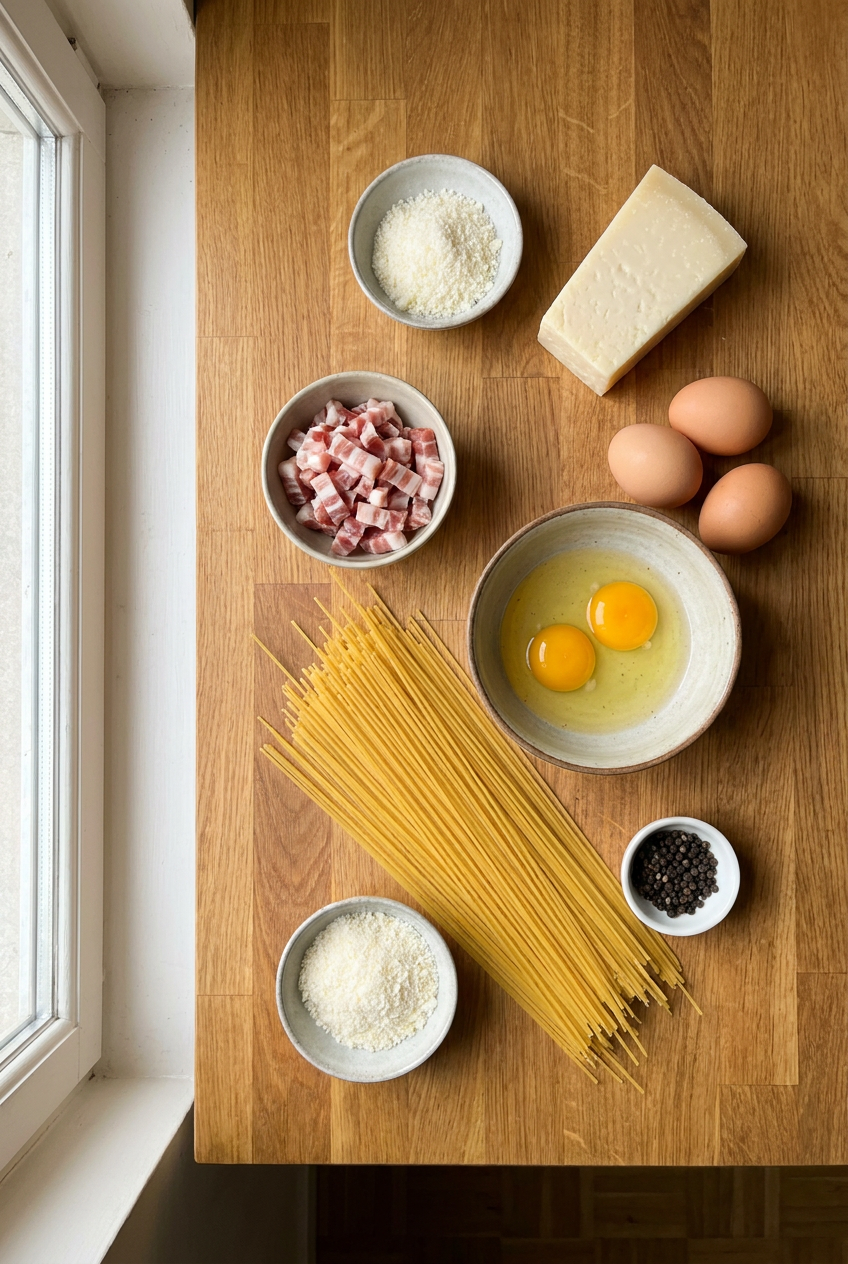
- 400g spaghetti, dried
- 150g pancetta, diced
- 3 large eggs, room temperature, pasteurized if desired
- 50g Pecorino Romano, finely grated
- 30g Parmesan cheese, finely grated
- 1 tsp freshly cracked black pepper, plus extra to serve
- 1 tbsp salt, for pasta water
Ingredient Notes
Spaghetti. The long, thin shape of spaghetti is ideal for trapping the creamy sauce in its strands. You want a good quality dried pasta made from durum wheat semolina because it releases plenty of starch into the cooking water, which is crucial for building the emulsion later. Look for a brand imported from Italy with a rough, almost powdery surface rather than a slick yellow finish. If you prefer a thicker noodle, bucatini or linguine work just as well, but avoid very thin angel hair, which can clump together under the weight of the sauce.
Pancetta. This cured pork belly provides the rich, savory base of the dish. Unlike American bacon, pancetta is not smoked, so you get a clean, meaty pork flavor without any maple or hickory notes. Dice it into small, uniform cubes so it renders evenly and crisps up around the edges while staying a little chewy in the center. You can find pancetta at most grocery store deli counters or in the specialty cheese section, often sold already diced. In a pinch, good quality unsmoked bacon is an acceptable substitute, but for true authenticity, seek out guanciale, which is cured pork cheek and offers an even deeper, more delicate fat.
Eggs. Room temperature large eggs are the backbone of the sauce, giving you richness and body. Cold eggs straight from the fridge can shock the hot pasta and lead to a curdled mess, so take them out at least thirty minutes before you start cooking. If you have concerns about consuming eggs that are not fully cooked, use pasteurized shell eggs and follow the tempering and finishing steps carefully. The eggs must reach an internal temperature of 160°F, which happens easily with the residual heat and a brief, controlled return to the stove if needed.
Pecorino Romano and Parmesan. The combination of sharp, salty Pecorino and nutty, slightly sweet Parmesan creates a balanced backbone. Pecorino is a sheep’s milk cheese that brings a distinct tang, while cow’s milk Parmesan rounds it out and adds meltability. Always buy a block and grate it yourself on a microplane or the finest side of a box grater right before you need it. Pre-shredded bags contain starches and anti-caking agents that will sabotage your silky sauce, leaving it grainy or clumpy. The cheese must be very fine to melt into the egg mixture seamlessly.
Black pepper. This is not a background note but a starring flavor. Use whole peppercorns and grind them coarsely, so you get little pops of heat throughout the dish. Freshly cracked pepper has a floral, fruity complexity that pre-ground powder lacks entirely. I like to add a teaspoon to the egg mixture and then shower more over the finished plates. The pepper plays against the richness of the pork and cheese, keeping each bite lively.
Salt. The only salt in the recipe goes into the pasta water, and you need a generous amount. The water should taste like the sea to properly season the spaghetti from the inside out. Because Pecorino and pancetta both contribute salt, you do not need to add any extra to the sauce itself, but underseasoned pasta water will result in a flat finished dish.
How to Make Perfect Easy Spaghetti Carbonara
Phase 1: Build the foundation
Step 1: Cook the spaghetti
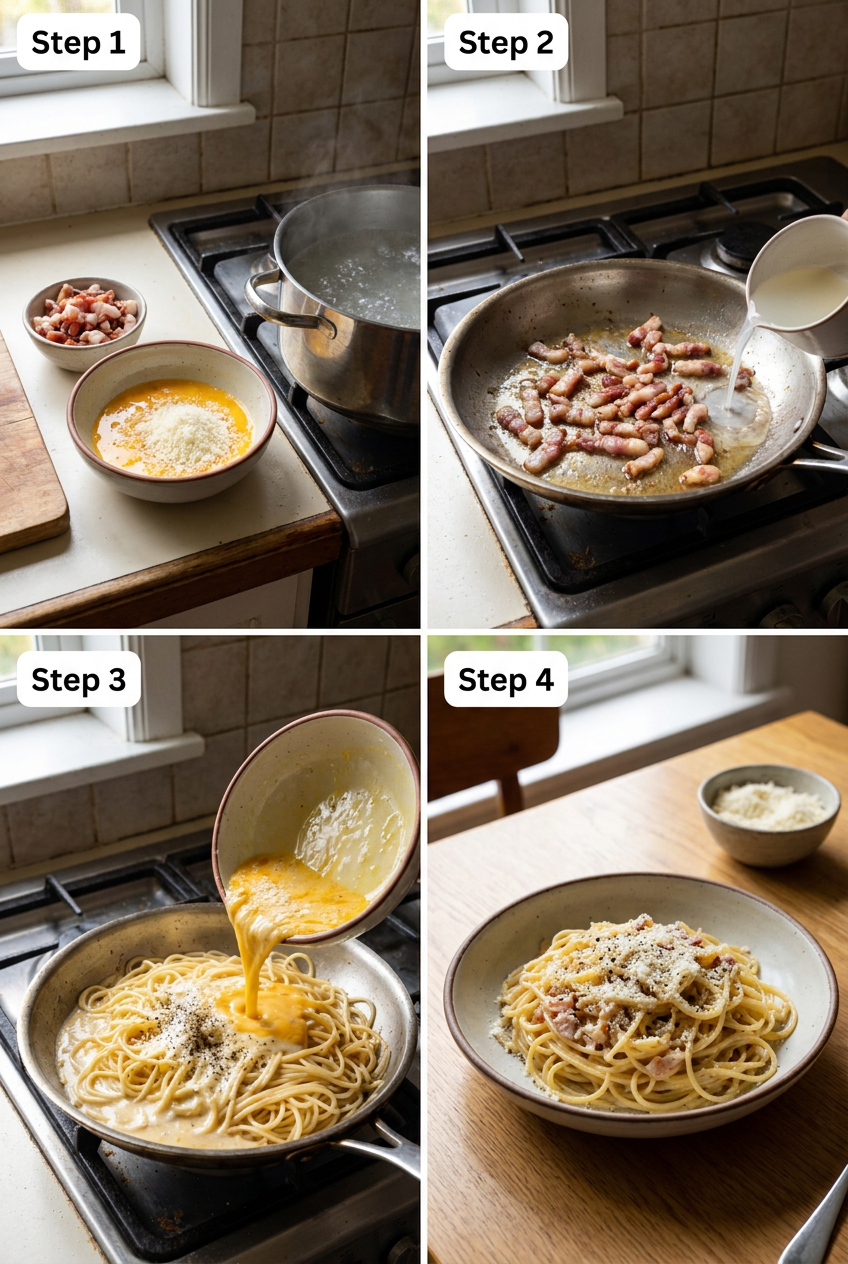
Fill a large pot with water, leaving a couple of inches of space at the top so it does not boil over. Bring it to a rolling boil over high heat, which means large bubbles should be breaking vigorously on the surface. Once it reaches that point, stir in the tablespoon of salt. Taste the water, it should remind you of ocean water. Add the spaghetti, fanning it out so the strands do not stick together, and give it a good stir with a long handled spoon or tongs. Cook according to the package directions for al dente, usually about one minute less than the full suggested time, because the pasta will finish cooking in the skillet later. About two minutes before the timer goes off, dip a heatproof measuring cup into the pot and scoop out a full cup of the cloudy, starchy pasta water. Set it aside. Drain the spaghetti into a colander, but do not rinse it. You want the surface starch intact.
Step 2: Render the pancetta
While the water is coming to a boil, place the diced pancetta in a cold large skillet, spreading it into an even layer. Set the pan over medium heat and let it come up to temperature gradually. You will hear a gentle sizzle as the fat begins to melt away from the meat. Stir occasionally with a wooden spoon, scraping up any browned bits. After five to seven minutes, the pancetta will transform from pale pink pieces into deeply golden, crispy morsels surrounded by clear, shimmering fat. The aroma should fill your kitchen with a savory, slightly sweet pork scent. Once the pancetta is uniformly crisp but still a little tender when you bite into a piece, turn off the heat completely and leave the pan on the stove. Do not drain the fat, that liquid gold is flavor.
Phase 2: Create the creamy sauce
Step 3: Make the egg mixture
Crack the three room temperature eggs into a medium mixing bowl. Add the finely grated Pecorino Romano and Parmesan, then spoon in the teaspoon of freshly cracked black pepper. Whisk everything together with a fork or a small whisk until the mixture is completely uniform and looks like a thick, pale yellow custard. There should be no streaks of egg white or clumps of cheese. If your eggs were cold, the mixture might seem slightly lumpy, but whisking for a good minute should smooth it out. Set the bowl near the stove so it is within easy reach.
Step 4: Combine pasta and sauce
With the skillet still off the heat, tip the drained hot spaghetti directly into the pan with the pancetta and its rendered fat. Use tongs to toss the pasta thoroughly until every strand glistens. Now, slowly pour a few tablespoons of the hot reserved pasta water into the bowl of egg mixture while whisking constantly. This step tempers the eggs, gently raising their temperature so they do not scramble when they hit the hot pasta. Pour the warmed egg mixture all over the spaghetti and immediately begin tossing with the tongs, lifting and turning the pasta rapidly. The sauce will start out thin and then, as you keep moving, the starch from the pasta water will bind with the egg and cheese to create a glossy, creamy coating. Drizzle in a little more pasta water, a tablespoon at a time, continuing to toss until the sauce reaches a velvety consistency that clings to the noodles. If you have a kitchen thermometer, check that the sauce has reached 160°F. If not, set the skillet over the lowest possible heat and stir continuously for thirty seconds to a minute just until it hits that temperature, then pull it off immediately. The moment the sauce is silky and coats the back of a spoon, stop.
If you have ever tried making a slow simmered Moroccan chicken tagine, you know that patience and gentle heat are the secrets to a beautiful finished dish. Carbonara demands the same kind of attentiveness, just on a much quicker timeline. Rushing with high heat leads to scrambled eggs, so stay calm and keep the pan moving.
Step 5: Serve immediately
Warm your serving plates by running them under hot tap water or placing them in a low oven for a couple of minutes. Divide the Carbonara among the plates, using tongs to twist the spaghetti into neat nests if you like. Shower each portion with extra finely grated Pecorino Romano and a generous shower of freshly cracked black pepper. Serve right away because the sauce thickens as it cools. Encourage everyone to dig in while the pasta is still steaming and the cheese is melting into the crevices.
Pro Tips and Easy Variations for Your Easy Spaghetti Carbonara
Pro Tips
- Always toss the pasta off the heat. The residual warmth from the spaghetti and the pancetta fat is more than enough to cook the eggs to a safe temperature and create a smooth sauce. Keeping the burner off prevents any risk of scrambling, and if you need a tiny nudge of heat at the end, use the lowest setting and be ready to pull the pan away in seconds.
- Reserve more pasta water than you think you will need. I always scoop out at least a full cup, sometimes more. That starchy liquid is your insurance policy. If your sauce seems too thick, a splash will loosen it beautifully. If it is too thin, a little more tossing reduces it. You cannot add starch back once the water is down the drain, so be generous.
- Grate the cheese yourself from a block. Pre shredded cheese contains anti caking agents that prevent the cheese from melting into the egg mixture properly. Taking five minutes to finely grate a chunk of Pecorino Romano and Parmesan yields a sauce that is velvety rather than grainy. Use a microplane for the finest texture.
- Use room temperature eggs. Cold eggs are far more likely to curdle when they meet the hot pasta. Place your eggs in a bowl of warm tap water for ten minutes if you forgot to pull them out early. This small step makes a dramatic difference in how smoothly the sauce comes together.
- Go heavy on the black pepper. Carbonara should taste distinctly peppery. Do not be shy, a full teaspoon in the egg mixture and another generous cracking at the table brings the dish alive. Buy whole peppercorns and grind them fresh for the best flavor.
- Warm your serving bowls. A cold plate will suck the heat out of your pasta and cause the sauce to stiffen quickly. Fill bowls with hot water, let them sit while you finish the dish, then empty and dry them just before plating. Your Carbonara will stay creamy down to the last bite.
Delicious Variations
- Classic guanciale swap. For the most authentic Roman experience, replace the pancetta with guanciale, which is cured pork cheek. Its fat is even silkier and slightly sweeter, and it crisps up beautifully while staying meltingly tender inside.
- Green pea carbonara. Toss a handful of frozen peas into the pasta water during the last minute of cooking. They add a pop of color and a touch of natural sweetness that plays wonderfully against the salty pork and sharp cheese.
- Egg yolk only version. For an extra rich sauce, use six egg yolks instead of three whole eggs. The texture becomes even more unctuous, perfect for a special occasion when you want to indulge.
- Spicy pepper carbonara. Add a pinch of red pepper flakes with the black pepper to give the dish a gentle heat. It does not overpower the traditional flavors, just adds a subtle warmth that lingers.
- Long pasta swap. While spaghetti is classic, bucatini, a thick, hollow pasta, or linguine work perfectly. The thicker shapes hold the creamy sauce differently and make the dish feel brand new.
Once you have mastered this easy spaghetti carbonara recipe, you might find yourself craving other simple, comforting dishes that come together without fuss. For a bright and fruity breakfast twist, blueberry lemon ricotta pancakes use a similar principle of building flavor with just a few high quality ingredients and a gentle touch.
Serving Suggestions for a Perfect Dinner
This Carbonara is wonderfully rich on its own, so I like to keep the sides simple and light. A peppery arugula salad dressed with fresh lemon juice, a drizzle of good olive oil, and a pinch of flaky salt cuts through the creaminess and brightens each mouthful. You can toss in some cherry tomatoes or shaved fennel if you have them on hand. For drinks, a crisp Italian white wine like Pinot Grigio or a dry Verdicchio pairs beautifully, echoing the savory cheese notes without overwhelming the palate. If you prefer red, a light Chianti or a Dolcetto works, but nothing too heavy.
This dish is tailor made for intimate dinners but scales up gracefully when you need to feed a crowd. For a larger group, cook two pounds of pasta in a bigger pot and double the pancetta and sauce ingredients. Use two skillets or work in batches to keep the pancetta crisp and the temperature easy to manage. To make it a complete meal, add a simple antipasto platter beforehand with marinated olives, artichoke hearts, and slices of fresh mozzarella. Whether it is a cozy Friday night in front of a movie or a celebratory birthday dinner, Carbonara always feels like an occasion.
Nutrition Information
(Approximate per serving, 4 servings total) Calories: 550, Fat: 28g, Carbohydrates: 45g, Protein: 24g, Fiber: 2g, Sodium: 600mg. Nutritional values are estimates only.
Storage and Make-Ahead Instructions
- Refrigerator: Store leftovers in an airtight container in the fridge for up to 3 days. The sauce will firm up as it chills, but the flavor remains excellent. Note that the texture loses its fresh silky quality, so it is best enjoyed the day it is made.
- Freezer: Freezing is not recommended because the egg-based sauce will separate and become grainy upon thawing. If you must freeze, expect a noticeable change in texture, and reheat very gently with a splash of water while whisking.
- Reheating: The gentlest way is in a skillet over low heat with a splash of water or milk. Toss the pasta frequently until warmed through, which usually takes about three to four minutes. Avoid the microwave if possible, as it can turn the eggs rubbery.
- Make-Ahead: The whole dish is best prepared and served immediately, but you can dice the pancetta and grate the cheeses a day ahead. Store them separately in the fridge. Bring the eggs to room temperature before you start cooking for the quickest assembly.
Your Easy Spaghetti Carbonara Questions Answered
Can I use bacon instead of pancetta?
Yes, but pancetta or guanciale gives a more authentic, less smoky flavor. Bacon often carries maple or hickory notes that can distract from the pure pork and cheese harmony. If you do use bacon, choose a thick cut unsmoked variety and dice it your own.
Why did my eggs turn into scrambled lumps?
The pan was too hot when you added the egg mixture, or the eggs were not tempered properly. Always remove the skillet from the heat entirely before adding the sauce, and whisk a few tablespoons of hot pasta water into the eggs first. That gentle warming prevents the proteins from seizing up.
Is this recipe gluten-free?
Not as written, but you can easily make it gluten-free by substituting gluten-free spaghetti. Be sure to use a brand that releases enough starch, as that helps build the creamy sauce. Check that your cheese and pancetta are certified gluten-free, as some cured meats may contain hidden wheat.
Can I make Carbonara without Pecorino Romano?
You can, but the flavor will change noticeably. All Parmesan works but will be less tangy and salty. I recommend using an equal amount of a sharp, hard Italian grating cheese. The combination of Pecorino and Parmesan is classic for a reason, so try to find at least one of them.
How do I know when the sauce is done?
The sauce is ready when it coats the back of a spoon and looks glossy and creamy without any thin watery liquid pooling at the bottom of the skillet. For food safety, you can use a kitchen thermometer, the sauce needs to reach 160°F. It should never look like scramble or separate into oily bits.
Can I prepare Carbonara ahead of time for a dinner party?
Carbonara is best made right at serving time because the texture declines quickly. If you must get ahead, have all your ingredients measured and the water almost boiling. You can cook and drain the pasta, then toss with the pancetta and tempered egg mixture at the last minute in front of guests, it takes only a few minutes.
My sauce turned out too thick, what should I do?
Simply add a small splash of the reserved pasta water and toss vigorously. The starch in the water will loosen the sauce without thinning the flavor. Keep adding a little at a time until you reach a consistency you love.
Can I use egg yolks only?
Yes, using just yolks makes the sauce richer and more unctuous. Use about six yolks for 400g of pasta, and follow the same tempering and tossing steps. You may need slightly less pasta water because yolks alone create a thicker emulsion.
What is the best pasta water to use?
Use the water you cooked the spaghetti in, as long as you salted it well. The starch released from the pasta during boiling is what creates the creamy emulsion. Never use plain tap water as a substitute because it lacks the binding power of starch.
How can I add vegetables without ruining the dish?
Peas or asparagus tips work nicely. Add them to the pasta pot during the last minute of boiling, then drain and toss with the pasta and pancetta. Keep the additions small so the creamy sauce still clings to the noodles and the vegetables do not dilute the richness.
More Incredible Italian Recipes to Try
If the cozy simplicity of this easy spaghetti carbonara recipe captured your heart, there are so many other Italian inspired dishes to add to your rotation. One of my absolute favorites for a leisurely weekend is the classic Roman pasta cacio e pepe, which relies on the same magical combination of starchy pasta water, Pecorino Romano, and black pepper. It is even more minimalist than carbonara, with no egg or pork, yet it delivers a similarly creamy, peppery punch that makes you feel like a kitchen wizard. Pair it with a bright panzanella salad or some roasted cherry tomatoes for a complete meal.
For those evenings when you want something a bit more rustic and hands on, a slow braised osso buco with gremolata or a hearty Bolognese sauce simmered all afternoon on the stove fills the home with incredible aromas. Both teach you the art of layering deep flavors and reward patience. And if you are in the mood to explore pasta with vegetables, try a simple Pasta alla Norma with roasted eggplant, tomatoes, and ricotta salata. Each of these dishes celebrates the Italian philosophy of letting a few excellent ingredients shine, much like this carbonara. You might also discover that the gentle technique used here translates beautifully to other egg-enriched pasta dishes, giving you confidence to experiment with homemade pastas and sauces.
The Story Behind This Easy Spaghetti Carbonara
Spaghetti Carbonara is a relatively modern addition to the Roman culinary canon, with most food historians tracing its origins to the mid-20th century. The name likely derives from “carbonaro,” the Italian word for charcoal burner, sparking charming theories about the dish being a hearty meal for workers fueling long shifts. Some say it was born when American GIs stationed in Italy during World War II introduced bacon and eggs to local cooks, who then combined them with their beloved pasta and cheese. The earliest printed recipes appeared in the 1950s, and they already featured guanciale, egg, Pecorino, and pepper, without cream, garlic, or onions.
Over the decades, Carbonara has traveled far beyond Rome, often accumulating heavy cream and extraneous ingredients along the way. Returning to an easy spaghetti carbonara recipe that honors the original spirit, just five core components, feels like a quiet act of preservation. Every time I make it, I think about the countless Italian home cooks who perfected this technique by feel, passing it down through generations without ever writing it down. There is something profoundly satisfying about being part of that continuum, even from my own kitchen thousands of miles away. This dish reminds me that the best food often requires the least fuss and that simplicity, when done with care, is the ultimate sophistication.
Pin This Easy Spaghetti Carbonara Recipe for Later
Love this recipe? Save it to your favorite Pinterest board so you can find it again easily. Share it with friends and family who would enjoy making it too.
I truly hope this easy spaghetti carbonara recipe becomes a staple in your home the way it has in mine. There is something magical about turning a handful of humble ingredients into a bowl of pure comfort in under half an hour. I would love to hear how yours turned out, whether you stuck with classic pancetta or tried guanciale, or maybe you added peas for a pop of color. Please drop a comment below and let me know, and as always, happy cooking.
Easy Spaghetti Carbonara
Ingredients
Method
- Bring a large pot of water to a rolling boil, then add 1 tbsp salt. Add spaghetti and cook until al dente according to package instructions. Reserve 1 cup of pasta cooking water before draining.
- While the pasta cooks, place diced pancetta in a large cold skillet. Set over medium heat and cook, stirring occasionally, until the fat renders and the pancetta turns crispy and golden, about 5–7 minutes. Remove from heat.
- In a medium bowl, whisk together eggs, Pecorino, Parmesan, and black pepper until well combined and creamy.
- With the skillet off the heat, add the drained hot spaghetti directly into the pan with the pancetta and its rendered fat. Toss well. Temper the egg mixture by slowly whisking in a splash of hot reserved pasta water to warm it, then pour over the pasta. Toss vigorously, drizzling more pasta water as needed until a silky, creamy sauce forms. For food safety, ensure the sauce reaches 160°F (71°C). If it hasn’t, set the skillet over very low heat and stir constantly just until it reaches the temperature—do not scramble.
- Divide among warm plates, top with extra grated cheese and a generous crack of black pepper. Serve at once while creamy.
Disclosure: This post may contain affiliate links. If you purchase through our links we may earn a small commission at no extra cost to you.
If you made this Easy Spaghetti Carbonara, please leave a comment below and let me know how it turned out.